





 Vietnamese
 中文
中文
 日本語
日本語
 한국어
한국어
 Français
 Русский
 Deutsch
 Español
 Bahasa Indonesia
 ไทย
ไทย
 ພາສາລາວ
 ខ្មែរ
ខ្មែរ


Q: You said that Germany has many different types of beer? Do you know the number exactly?
A: So I did a quiz, which tells which food has the most different types in Germany: sausage, bread or beer. And for beer there are more than 300 different types and for bread, there are more than 700 kinds of bread. Yes, that sounds really ridiculous!
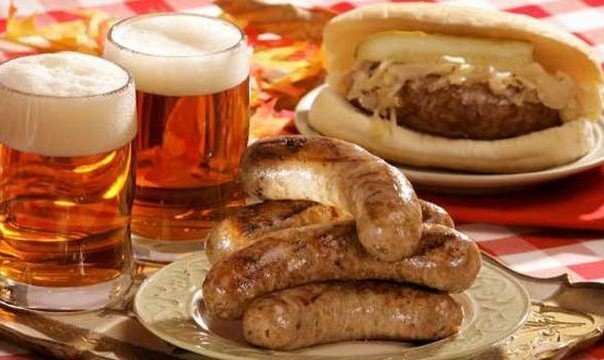 |
| Sausage, beer and bread are typical foods of German cuisine (Photo: TripKen) |
Q: And sausages?
A: I think there are around 100.
Q: Wow, impressive. But what makes the sausage different though? Is it because of the food ingredients or the sausage’s shape?
A: In different part of Germany, people prepare sausages differently and it also depends on how small you mince the meat and the seasonings and the herbs. In the South there is one kind of sausage that looks white. The German name is translated as White Sausage. We also have sausages that are for BBQ’s. Then we have Currywust. They are also sausages but are chopped into small pieces and served with curry ketchup.
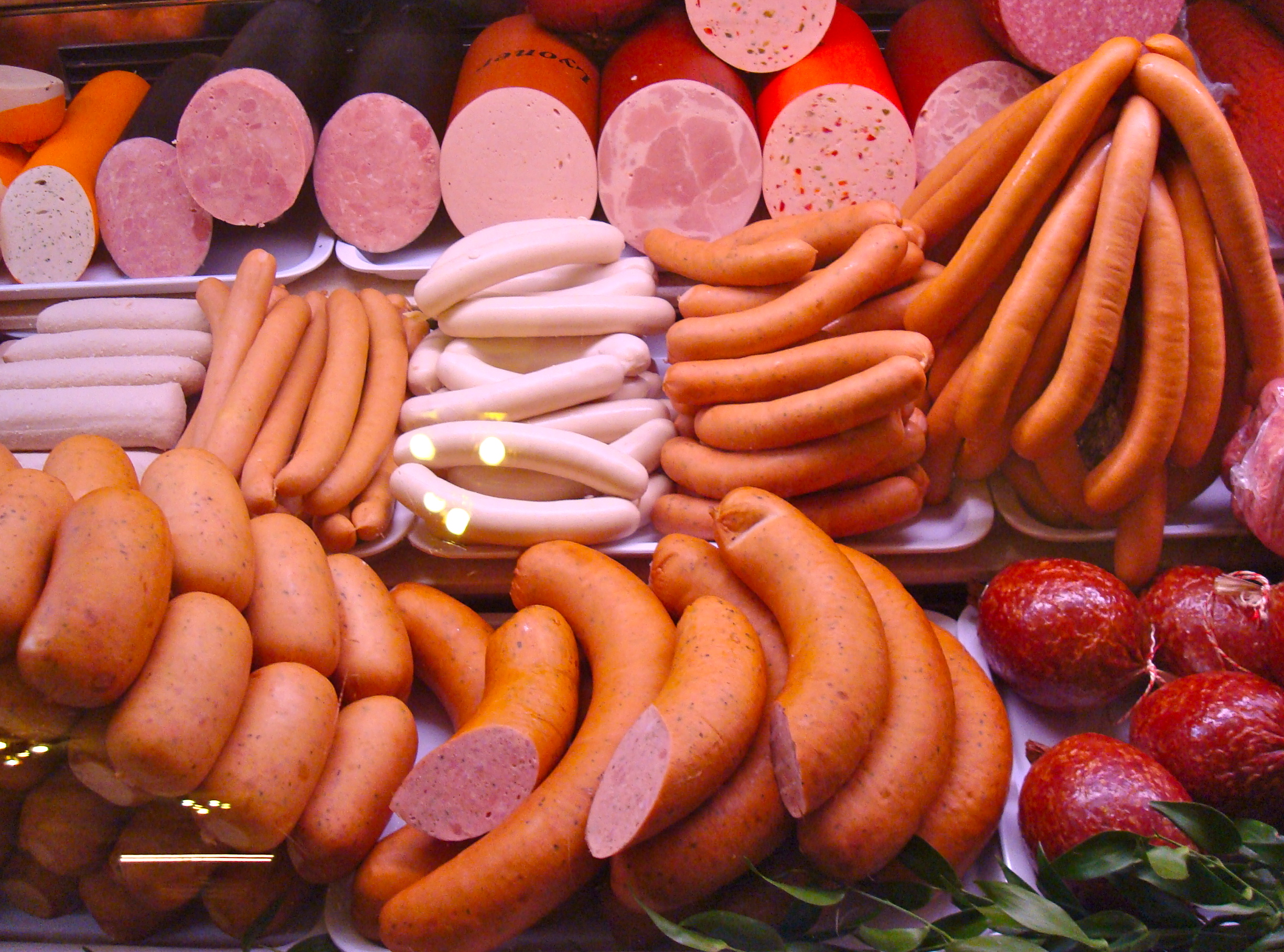 |
| Various sausages and cold cuts in Germany (Photo: Back Road Journal Wordpress) |
Q: Uhm, not really. I’m sorry but it’s not tempting to me.
A: No? I just turned vegetarian so I don’t eat them anymore but in the past, I used to like blood sausages very much.
Q: Can people make sausage at home?
A: I’ve never made sausage on my own because you need a long tube to stuff the sausage. I have not known anyone who makes it at home. I would go to the supermarket because it’s easier.
Q: Is sausage something you eat everyday?
A: I don't think there is any food we eat everyday. Because right now, German people are richer than before so we don’t have to eat one kind of food everyday. A few years ago, when Germany was still poorer, people ate potatoes everyday because they grow very fast and well in my country. But today I can choose whatever I want to eat.
Q: How about sweets and pastries? Is Germany famous for cakes?
A: Each city has its own cake and pastry. In my hometown, we have something called wuppi. The name was taken from my town’s name, which is Wuppertal. The pastry is triangular in shape and filled with chocolate bits or sweets. Well, it’s nothing special but it’s good. And in Berlin, we have a pastry, which looks like a donut but without the hole in the middle. And then the fillings can be jam or vanilla pudding. You can buy it in the bakery.
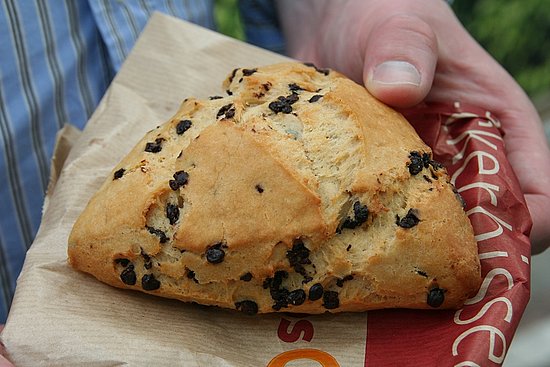 |
| The triangular Wuppi can be filled with chocolate bits or other sweets. (Photo: la ménagère débutante) |
Q: That wuppi sounds delicious; can you make it at home?
Q: It seems that a lot of Germany and other Westerners are turning into vegans or vegetarians right now. Where did the trend start in your country?
A: I think the trend is starting right now and started in Berlin. Berlin is like a fashion city where a lot of people are living a healthy lifestyle. But the trend is getting more and more popular but it’s more common in bigger cities than in rural areas. So in big cities, people are eating vegan or vegetarian a lot.
A: It’s more open here so you can see how the animals are treated. But in Germany, it’s a controversial topic because we don't really see it. The meat is quite cheap sometimes so people don't really think about the meat they eat or about how the animals are treated. There are mass productions where the animals are kept in really small spaces. We have special laws for how much space animals need but it’s so small that it’s not enough.
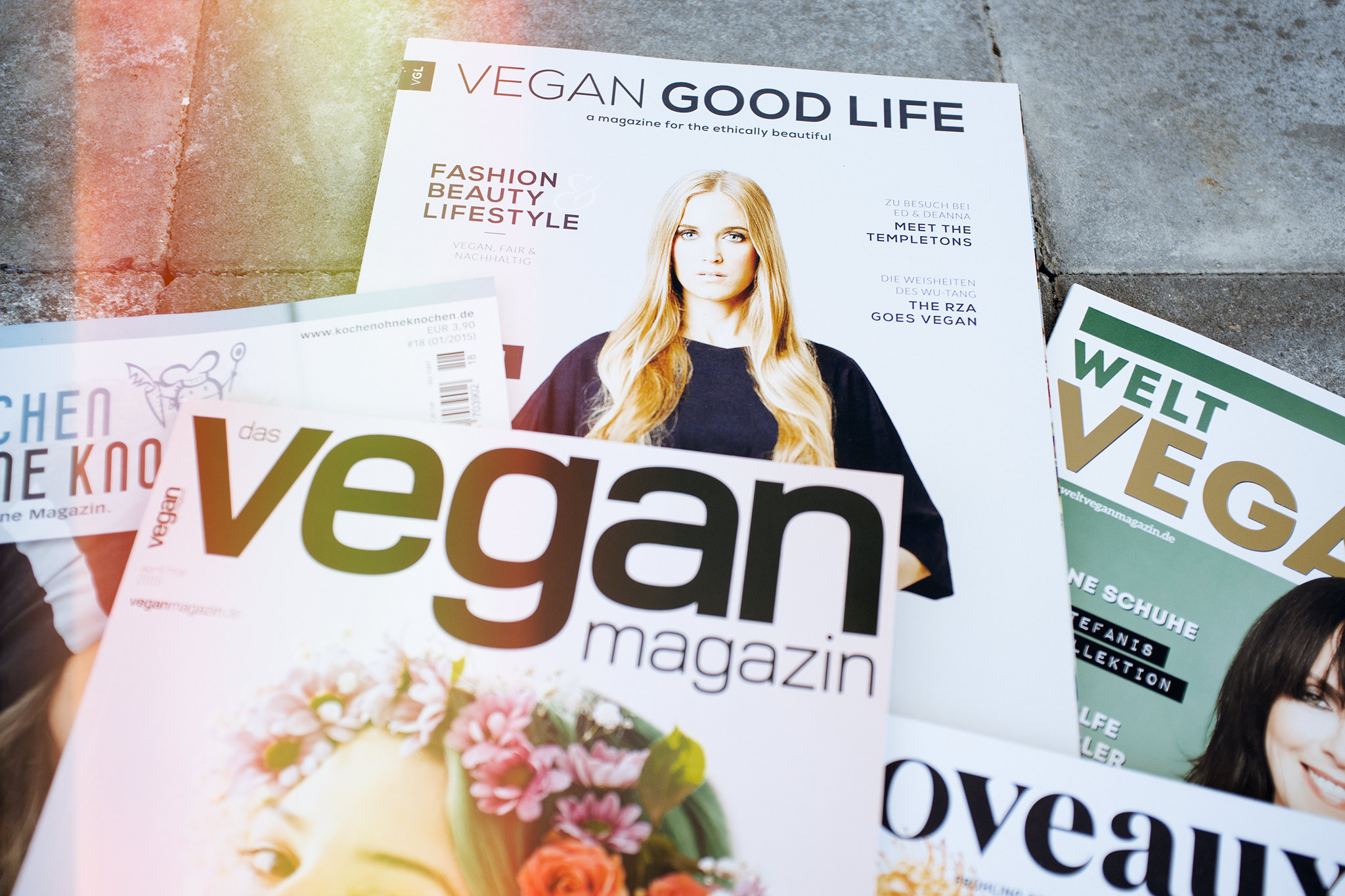 |
| Magazines for vegans and vegetarians in Germany (Photo: Vegan Good Life) |
Q: So you don’t eat meat anymore just because it’s a trendy eating habit, or is there any other reason?
A:It’s more open here so you can see how the animals are treated. But in Germany, it’s a controversial topic because we don't really see it. The meat is quite cheap sometimes so people don't really think about the meat they eat or about how the animals are treated. There are mass productions where the animals are kept in really small spaces. We have special laws for how much space animals need but it’s so small that it’s not enough.
Q: Thank you Paula for sharing with us your stories.
And that has been this week’s Culture Rendezvous. Remember to tune in next time for more interesting cultural features around the world. I’m Dieu Ha and good bye!
