





 Vietnamese
 中文
中文
 日本語
日本語
 한국어
한국어
 Français
 Русский
 Deutsch
 Español
 Bahasa Indonesia
 ไทย
ไทย
 ພາສາລາວ
 ខ្មែរ
ខ្មែរ


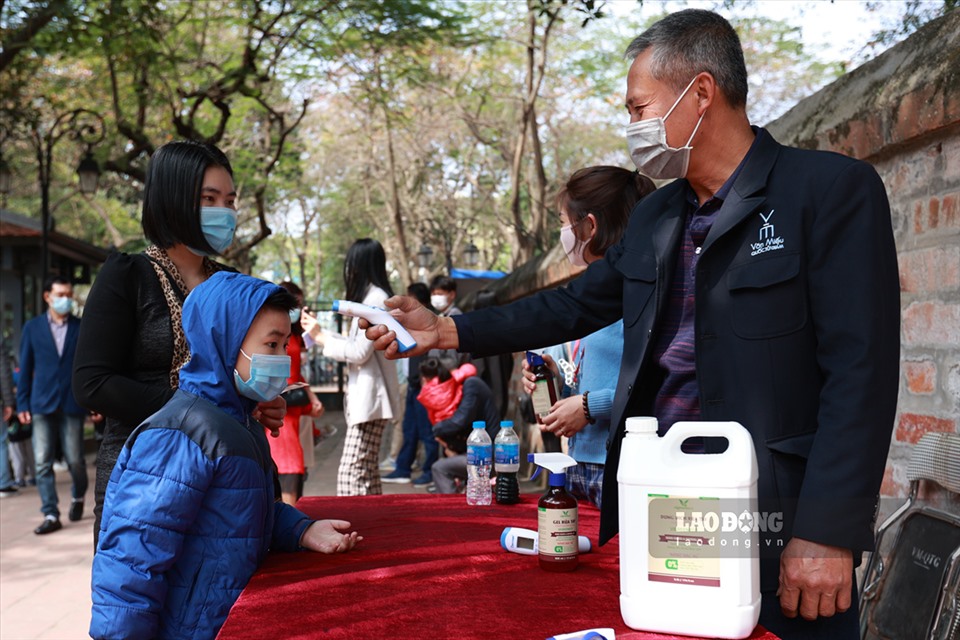 Visitors have their body temperature checked and hands sanitized before entering Hanoi's Temple of Literature. (Photo: laodong.vn) Visitors have their body temperature checked and hands sanitized before entering Hanoi's Temple of Literature. (Photo: laodong.vn) |
Since the COVID-19 pandemic has been largely under control in Vietnam, many relic sites and religious facilities have reopened with anti-COVID-19 measures strictly enforced in accordance with authorities’ pandemic preventive regulations.
Religious rituals and praying sessions are allowed to take place with a small number of participants. Control stations have been set up at venues of festivals and religious events to deal with any violations while posters with information on anti-COVID-19 guidelines have been hung up.
Body temperature sensors and automatic sanitizers have been installed at the entrance of the Thang Long Imperial Citadel relic site in Hanoi.
Vu Quang Tam, a visitor from the central province of Quang Nam, said he feels secure while visiting Hanoi’s Temple of Literature as anti-COVID-19 measures have been enforced.
Starting from March 13 (the 1st day of the second lunar month), the Huong or Perfume Pagoda festival resumed. Visitors are required to wear masks, constantly sanitize their hands, and fill in electronic health declaration forms. Cable cars are regularly disinfected.
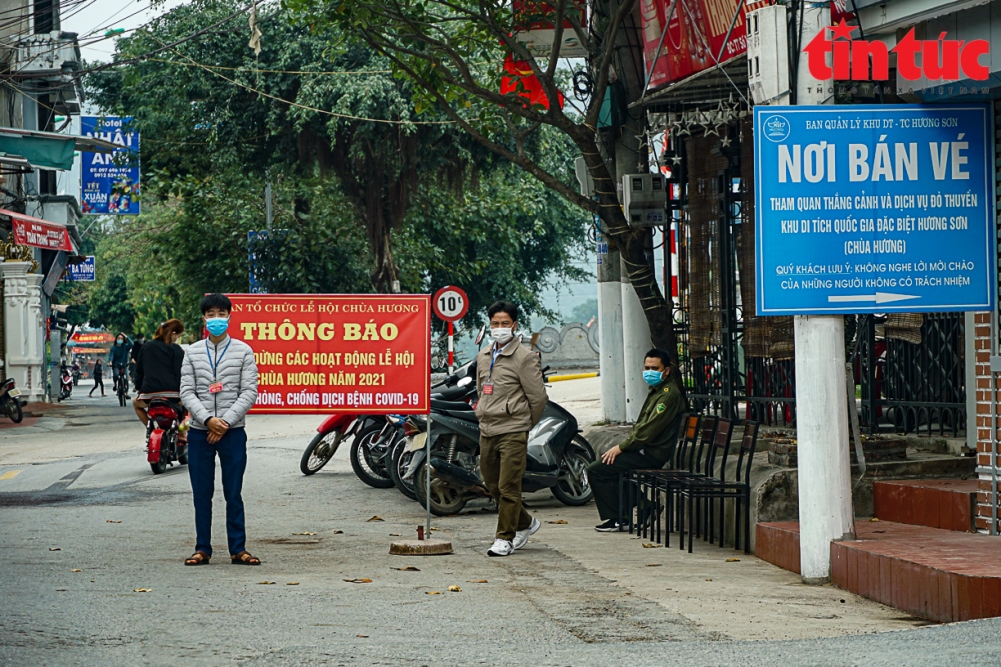 A control station is set up at the entrance of Huong pagoda. (Photo: baotintuc) A control station is set up at the entrance of Huong pagoda. (Photo: baotintuc) |
"We’re very excited to hear that the Perfume Pagoda Festival has resumed in the 2nd lunar month. Visitors like us should abide by all anti pandemic measures to protect ourselves and others as well," said Tran Huy Van, a visitor from Yen My commune, Hanoi’s Thanh Tri district.
Big festivals like the seal opening festival at the Tran Temple in Nam Dinh province, the Giong festival in Hanoi, and the Yen Tu festival in Quang Ninh province have been postponed. Some other festivals like the Cua Ong festival in Quang Ninh, will be carried out without procession and usual activities. Lê Mạnh Sơn is a visitor to Cua Ong temple:
