





 Vietnamese
 中文
中文
 日本語
日本語
 한국어
한국어
 Français
 Русский
 Deutsch
 Español
 Bahasa Indonesia
 ไทย
ไทย
 ພາສາລາວ
 ខ្មែរ
ខ្មែរ


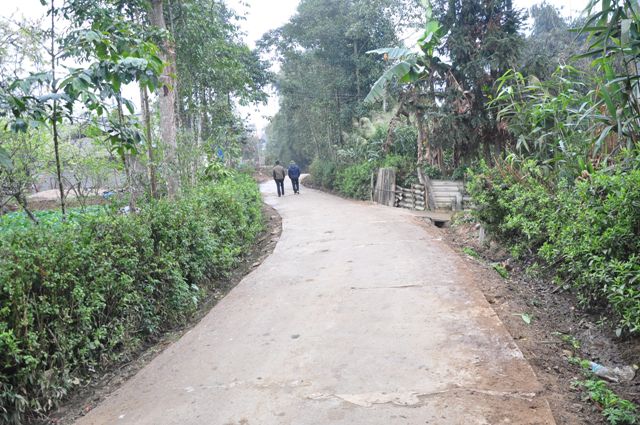
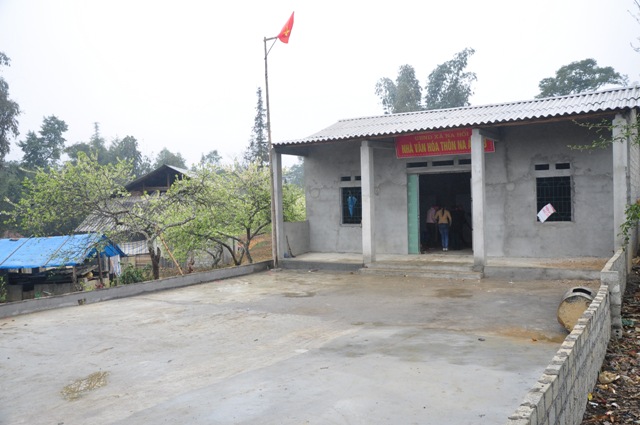
One of the 3 most disadvantaged communes of Bac Ha district, Na Hoi is currently being aided by a government program of rapid and sustainable poverty reduction. The commune has 996 households comprising more than 4200 people of 12 ethnic minorities including Nung, Dao, Mong, and Tay. Under the new rural development program, the local authorities in Na Hoi have mobilized every possible investment resource to upgrade the hamlets’ infrastructure, including encouraging the local people to donate their land and volunteer their labor. In 2013, a 3-km asphalted road was built and almost every hamlet in the commune has built its own cultural house.
 |
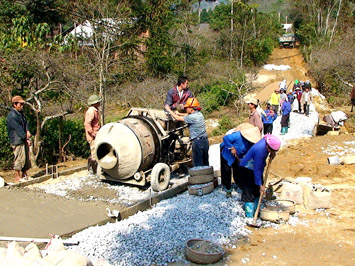 People in Na Hoi joined hands to construct the roads. Photo: internet |
Party Secretary of Na Hoi Commune Tran Hoang Tuan attributes the success of the local new rural development program to the consensus achieved by the local authorities and citizens. Many organizations and individuals have contributed both property and labor to the program. Trang Thi Lan and her family in Na Hoi Tay hamlet donated 200 square km of land and 500 USD to construct roads connecting their hamlet with Sin Chai A and Sin Chai B hamlets. Tuan said: "Na Hoi commune has completed 11 of the 19 criteria of the new rural development program, thanks to effective communications to help the local people understand the program’s importance, which in turn helps local authorities address their problems, tightens the bonds between them and the citizens, and helps to make the program a success."
 |
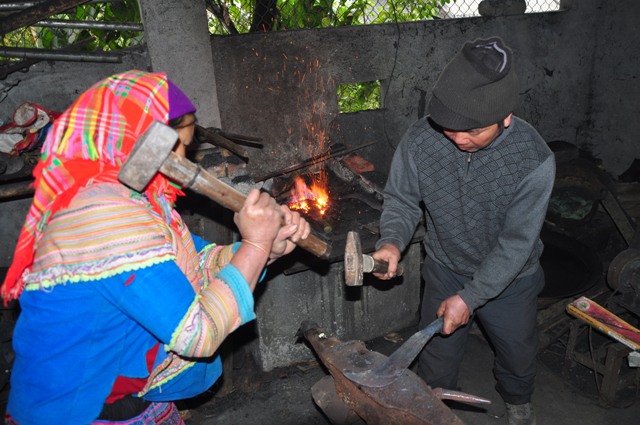
For people in Na Hoi, the new rural development program means more than new paved roads and cultural houses. The program is supposed to improve their living conditions and reduce their poverty in a more sustainable manner. In 2013, Na Hoi’s poverty rate fell from 36% to 26%. Sung Van Xeng, a Mong man, lives in Ngai Thau hamlet, said: "Our living conditions have improved significantly both physically and spiritually thanks to the program. We are offered loans to develop our household businesses to get out of poverty. Our businesses have grown thanks to more convenient transportation. Our family grows corn and rice and sells them from home instead of having to take them to the far away market."
 |
The average annual income in Na Hoi has risen to 500 USD. The commune has established a cooperative to produce herbal medicines that will generate additional income. Deputy Chairman of the Na Hoi People’s Committee Tran Dac Ha says the commune wants to combine tourism development with the new rural development to take advantage of its ethnic cultural values and location adjacent to Bac Ha, a popular tourist town. Ha said: "Na Hoi is developing a model of “community tourism” in which local ethnic people will invite visitors to stay in their stilt houses. To do this, it’s important for the local people to keep their environment clean to attract more tourists."
This year, Na Hoi is determined to complete another 2 criteria of the new rural development program. To aid this effort, the local authorities are trying to improve the local economy by finding the outlets for Tam Hoa plums, a specialty of the Bac Ha region.
