

 Vietnamese
 中文
中文
 日本語
日本語
 한국어
한국어
 Français
 Русский
 Deutsch
 Español
 Bahasa Indonesia
 ไทย
ไทย
 ພາສາລາວ
 ខ្មែរ
ខ្មែរ


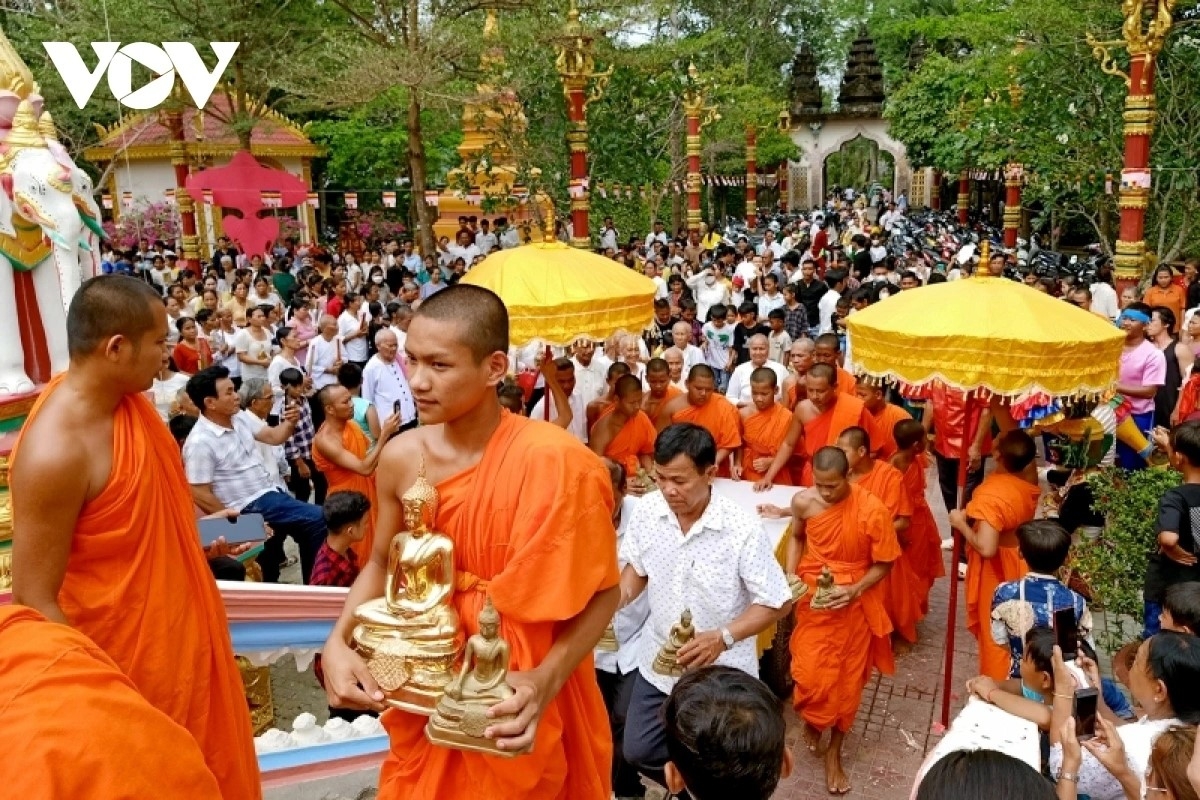
Vietnam has more than 1.5 million Khmer people, mainly residing in Can Tho, An Giang, Vinh Long, and Dong Thap. Theravada Buddhism plays a central role in their spiritual life.
Freedom of belief
Vietnam’s Law on Belief and Religion, adopted by the National Assembly on November 18, 2016, and effective from January 1, 2018, provides a legal framework to ensure that religious practices of all communities, including the Khmer, are conducted in accordance with the law while safeguarding their freedom of belief and religion.
The State and the Vietnam Buddhist Sangha have created favorable conditions for training and developing Theravada Buddhist clergy among the Khmer community. Many monks have pursued master’s and doctoral degrees in Buddhist studies in India, Sri Lanka, Thailand, Cambodia, and Myanmar.
The Khmer Theravada Buddhist Academy, established in 2006 in Can Tho, one of four academies under the Vietnam Buddhist Sangha, plays a key role in training Buddhist scholars and improving the qualifications of monks in Khmer pagodas across the Mekong Delta.
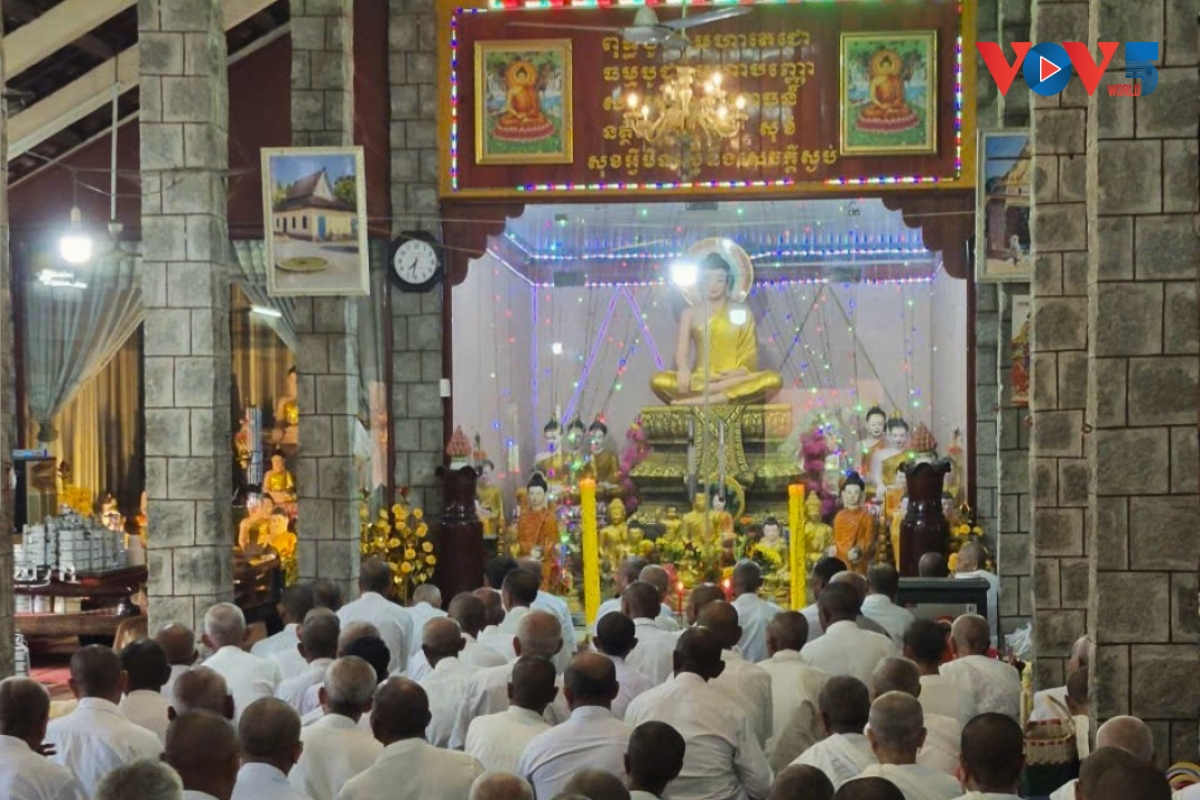
Local authorities in areas with large Khmer populations have promoted the role of respected community figures. Many Khmer Theravada Buddhist monks and followers are representatives in People’s Councils and the Vietnam Fatherland Front at various levels.
Neang Sam Bo, Vice Chairwoman of the People’s Committee of Ô Lâm commune in An Giang province, said: “O Lam commune is home to a large Khmer population. We always respect and ensure their freedom of belief and religion. Each year local authorities facilitate the organization of festivals and activities, while guiding religious institutions to operate in line with the law.”
Spiritual life and social security
The Khmer community possesses a rich and diverse cultural heritage preserved through generations, with festivals forming a distinctive cultural hallmark. Sene Dolta is the Ancestor Commemoration Festival, one of the three largest festivals of the Khmer, held over three days from the 29th day of the 8th lunar month to the 1st day of the 9th lunar month. Chol Chnam Thmay is the traditional Khmer New Year Festival celebrated in mid-April each year. Ok Om Bok is the Moon Worship Festival, held on the full moon of the 10th lunar month to honor and give thanks to the Moon, which the Khmer regard as a deity governing the harvest. These festivals attract large numbers of participants.
Pagodas hold a vital place in Khmer spiritual life. Each year, central and local authorities allocate funding to restore and upgrade Khmer Theravada Buddhist pagodas, particularly in disadvantaged areas. As a result, most pagodas have been renovated to better serve the religious needs of the community.
Chau Nho, a Khmer resident in An Giang province, said: “Going to the pagoda, we pray for health, peace, prosperity, good harvests, and a happy life. People come together in unity. We also enjoy traditional performances such as Chhay Yam dance, five-tone music, and Dù Kê theater, which brings great joy.”
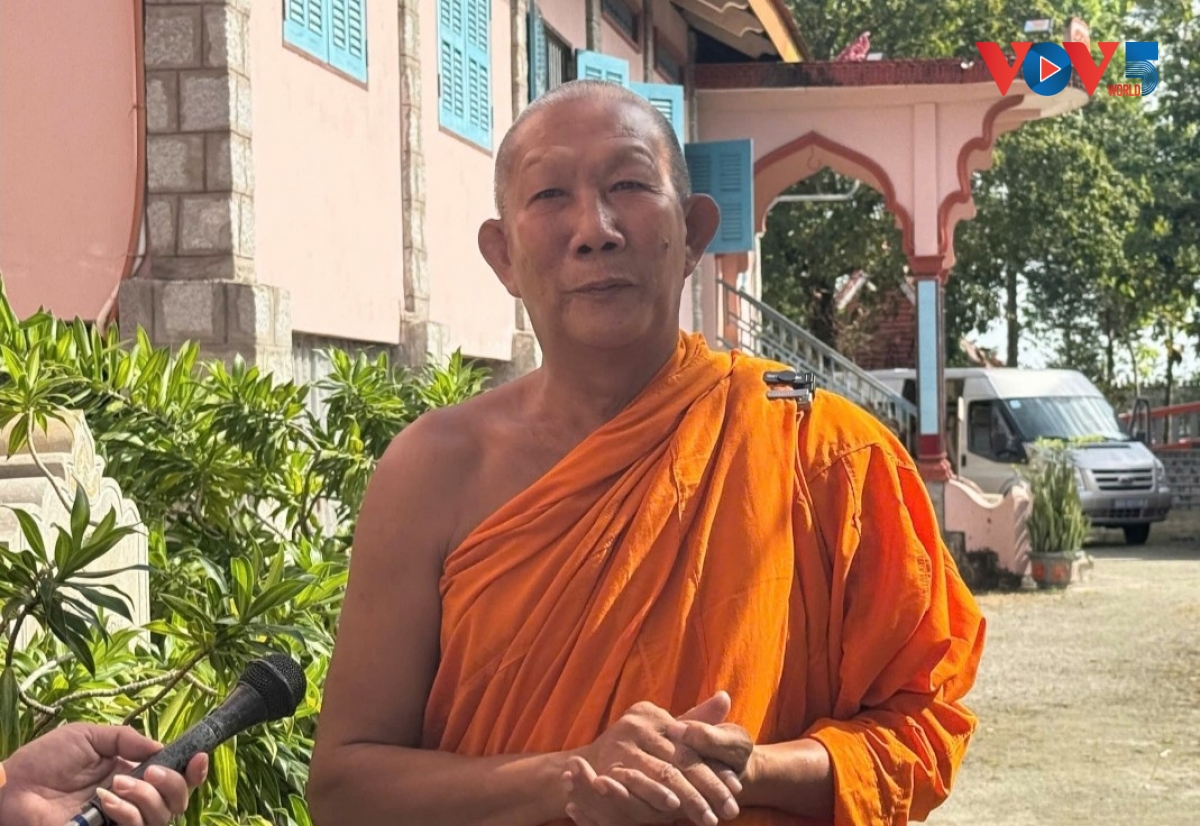
The State has also placed strong emphasis on social security for Khmer people and Buddhist followers.
Venerable Chau Son Hy, abbot of Sa Lon pagoda and Deputy Head of the Vietnam Buddhist Sangha’s Executive Board in An Giang province, said: “State policies have taken care of social security. In building new-style rural areas, the gap between rural and urban areas has narrowed. Previously, people relied on wells and had to carry water from afar. Now, clean water is supplied directly to households. Electricity, hospitals, and schools have also been upgraded, and living standards in rural and urban areas are becoming increasingly comparable.”
As an integral part of the Vietnam Buddhist Sangha, Khmer Theravada Buddhism continues to contribute to a peaceful and prosperous country. The State’s sustained support demonstrates its commitment to ensuring freedom of belief and improving the spiritual and social well-being of the Khmer community.