





 Vietnamese
 中文
中文
 日本語
日本語
 한국어
한국어
 Français
 Русский
 Deutsch
 Español
 Bahasa Indonesia
 ไทย
ไทย
 ພາສາລາວ
 ខ្មែរ
ខ្មែរ


Hung Temple’s Bronze Drum and Dong Son Bronze Drums – a sacred symbol of the Vietnamese people
Hung Temple’s Bronze Drum and Dong Son Bronze Drums – a sacred symbol of the Vietnamese people
(VOVWORLD) - The Hung Temple's bronze drum, the largest bronze drum in Vietnam and in Southeast Asia, is one of Vietnam’s renowned Dong Son bronze drums, a sacred symbol of the Vietnamese people.

Hung Temple’s Bronze Drum and Dong Son Bronze Drums – a sacred symbol of the Vietnamese people
Hung Temple’s Bronze Drum and Dong Son Bronze Drums – a sacred symbol of the Vietnamese people
(VOVWORLD) - The Hung Temple's bronze drum, the largest bronze drum in Vietnam and in Southeast Asia, is one of Vietnam’s renowned Dong Son bronze drums, a sacred symbol of the Vietnamese people.
La Phu village preserves communal house, pig procession festival
La Phu village preserves communal house, pig procession festival
(VOVWORLD) - La Phu village in Hanoi’s outlying district of Hoai Duc is one of the few ancient rural villages that well preserve its communal house and traditional festivals.
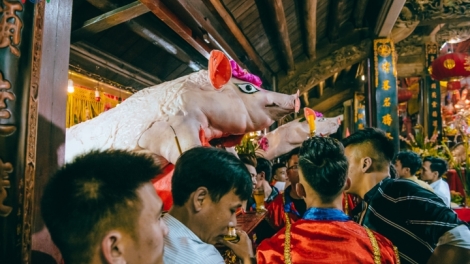
La Phu village preserves communal house, pig procession festival
La Phu village preserves communal house, pig procession festival
(VOVWORLD) - La Phu village in Hanoi’s outlying district of Hoai Duc is one of the few ancient rural villages that well preserve its communal house and traditional festivals.
Sin Suoi Ho village, Ta Leng pine forest features magnificent scenery, ethnic culture
Sin Suoi Ho village, Ta Leng pine forest features magnificent scenery, ethnic culture
(VOVWORLD) - Lai Chau province in the Northwestern region of Vietnam is known for its magnificent landscapes, rich culture, and great tourist attractions, such as Sin Suoi Ho village, Hoang Lien National Park, the Tien Son Caves, and Ta Leng pine forest. It’s said that this is now the best time to come here and explore the province’s attractions.

Sin Suoi Ho village, Ta Leng pine forest features magnificent scenery, ethnic culture
Sin Suoi Ho village, Ta Leng pine forest features magnificent scenery, ethnic culture
(VOVWORLD) - Lai Chau province in the Northwestern region of Vietnam is known for its magnificent landscapes, rich culture, and great tourist attractions, such as Sin Suoi Ho village, Hoang Lien National Park, the Tien Son Caves, and Ta Leng pine forest. It’s said that this is now the best time to come here and explore the province’s attractions.
A visit to Ang village and Doi cave in Moc Chau, Son La
A visit to Ang village and Doi cave in Moc Chau, Son La
(VOVWORLD) - Moc Chau is a wide, dreamy plateau in Vietnam’s northern mountains, 180 kilometers from Hanoi. Visitors can come on a motorbike or bus to Moc Chau, which entices visitors with its magnificent views, beautiful flowers, cool atmosphere, and rich ethnic minority cultures. The plateau is increasingly popular with tourists.

A visit to Ang village and Doi cave in Moc Chau, Son La
A visit to Ang village and Doi cave in Moc Chau, Son La
(VOVWORLD) - Moc Chau is a wide, dreamy plateau in Vietnam’s northern mountains, 180 kilometers from Hanoi. Visitors can come on a motorbike or bus to Moc Chau, which entices visitors with its magnificent views, beautiful flowers, cool atmosphere, and rich ethnic minority cultures. The plateau is increasingly popular with tourists.
Whale worshiping ritual preserved in Canh Duong fishing village
Whale worshiping ritual preserved in Canh Duong fishing village
(VOVWORLD) - Vietnamese people believe that every creature has a soul and that mountain and sea genies really exist. Coastal communities have been worshiping the sea genie and other water genies for thousands of years to express their gratitude for nature and their desire for a peaceful and prosperous life. Their faith encourages people to endure all difficulties and rely on the sea for their livelihood. The whale worshiping ritual has been preserved by the people of Canh Duong fishing village in the central Vietnam province of Quang Binh for hundreds of years.

Whale worshiping ritual preserved in Canh Duong fishing village
Whale worshiping ritual preserved in Canh Duong fishing village
(VOVWORLD) - Vietnamese people believe that every creature has a soul and that mountain and sea genies really exist. Coastal communities have been worshiping the sea genie and other water genies for thousands of years to express their gratitude for nature and their desire for a peaceful and prosperous life. Their faith encourages people to endure all difficulties and rely on the sea for their livelihood. The whale worshiping ritual has been preserved by the people of Canh Duong fishing village in the central Vietnam province of Quang Binh for hundreds of years.
Murals change life in Hanoi's residential areas
Murals change life in Hanoi's residential areas
(VOVWORLD) - Murals and 3D pictures on old walls to create new looks in living spaces has become a trend in many residential areas in Hanoi. Some of these projects can be found in alleys at 39 Phao Dai Lang and 72 Nguyen Chi Thanh. They are not only enjoyed by residents, but also by the people who often travel along these alleys, which brighten their day as they make their way to their destination.

Murals change life in Hanoi's residential areas
Murals change life in Hanoi's residential areas
(VOVWORLD) - Murals and 3D pictures on old walls to create new looks in living spaces has become a trend in many residential areas in Hanoi. Some of these projects can be found in alleys at 39 Phao Dai Lang and 72 Nguyen Chi Thanh. They are not only enjoyed by residents, but also by the people who often travel along these alleys, which brighten their day as they make their way to their destination.
Ao dai – The traditional attire of Vietnam
Ao dai – The traditional attire of Vietnam
(VOVWORLD) - Welcome to VOV’s Sunday Show, our biggest feature of the week, delving into Vietnamese culture and landscape. Each country has its own traditional attire, such as Kimono of Japan, Hanbok of South Korea, or Qipao of China. Vietnamese are proud of their “ao dai”. As time goes by, fashion has changed dramatically, and “ao dai” has been modified to serve as a symbol of beauty of millions of Vietnamese people.

Ao dai – The traditional attire of Vietnam
Ao dai – The traditional attire of Vietnam
(VOVWORLD) - Welcome to VOV’s Sunday Show, our biggest feature of the week, delving into Vietnamese culture and landscape. Each country has its own traditional attire, such as Kimono of Japan, Hanbok of South Korea, or Qipao of China. Vietnamese are proud of their “ao dai”. As time goes by, fashion has changed dramatically, and “ao dai” has been modified to serve as a symbol of beauty of millions of Vietnamese people.
Tet specialties of the H’Mong, Ede ethnic groups
Tet specialties of the H’Mong, Ede ethnic groups
(VOVWORLD) - Welcome to VOV’s Sunday Show, our biggest feature of the week, delving into Vietnamese culture and landscape. In today’s show, we’ll introduce the signature dish and beverage to celebrate the traditional Lunar New Year of the H’Mong ethnic minority group in Ha Giang province and the Ede in Dak Lak central Highland’s province. First, let’s visit Ha Giang province to learn how the H’Mong make their traditional maize cake.
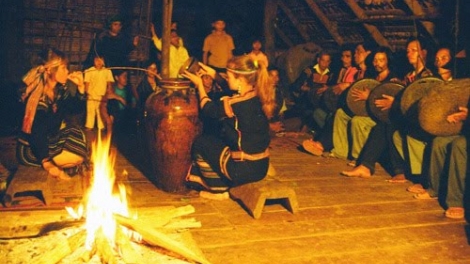
Tet specialties of the H’Mong, Ede ethnic groups
Tet specialties of the H’Mong, Ede ethnic groups
(VOVWORLD) - Welcome to VOV’s Sunday Show, our biggest feature of the week, delving into Vietnamese culture and landscape. In today’s show, we’ll introduce the signature dish and beverage to celebrate the traditional Lunar New Year of the H’Mong ethnic minority group in Ha Giang province and the Ede in Dak Lak central Highland’s province. First, let’s visit Ha Giang province to learn how the H’Mong make their traditional maize cake.
Original features of the Mong's New Year ceremony
Original features of the Mong's New Year ceremony
(VOVWORLD) - The Mong people are an important partof the community of 54 ethnic groups in Vietnam, with a population of about one million people. They are often found the highland areas, mostly in northern mountain provinces of Ha Giang, Lao Cai, Lai Chau, Son La and a few in the Central Highlands. The best time to visit the Mong is during the Lunar New Year in late January or early February, when they celebrate Tet festival.

Original features of the Mong's New Year ceremony
Original features of the Mong's New Year ceremony
(VOVWORLD) - The Mong people are an important partof the community of 54 ethnic groups in Vietnam, with a population of about one million people. They are often found the highland areas, mostly in northern mountain provinces of Ha Giang, Lao Cai, Lai Chau, Son La and a few in the Central Highlands. The best time to visit the Mong is during the Lunar New Year in late January or early February, when they celebrate Tet festival.
Thuong Mo commune preserves ca tru singing
Thuong Mo commune preserves ca tru singing
(VOVWORLD) - Ca tru (ceremonial singing), also known as hat a dao, is an ancient genre of music featuring female vocalists. It originated in northern Vietnam and was, like many traditional music genres, a form of entertainment for the royal court. Hundreds of years ago, Dai Phu village in Thuong Mo commune, Dan Phuong district, Hanoi, was a cradle of ca tru singing. During long years of war, the genre faded, but in the last 20 years, local authorities and residents have worked to restore and preserve ca tru singing by opening a club and organizing free classes to teach ca tru to people of all ages.

Thuong Mo commune preserves ca tru singing
Thuong Mo commune preserves ca tru singing
(VOVWORLD) - Ca tru (ceremonial singing), also known as hat a dao, is an ancient genre of music featuring female vocalists. It originated in northern Vietnam and was, like many traditional music genres, a form of entertainment for the royal court. Hundreds of years ago, Dai Phu village in Thuong Mo commune, Dan Phuong district, Hanoi, was a cradle of ca tru singing. During long years of war, the genre faded, but in the last 20 years, local authorities and residents have worked to restore and preserve ca tru singing by opening a club and organizing free classes to teach ca tru to people of all ages.

