





 Vietnamese
 中文
中文
 日本語
日本語
 한국어
한국어
 Français
 Русский
 Deutsch
 Español
 Bahasa Indonesia
 ไทย
ไทย
 ພາສາລາວ
 ខ្មែរ
ខ្មែរ


History of chewing betel
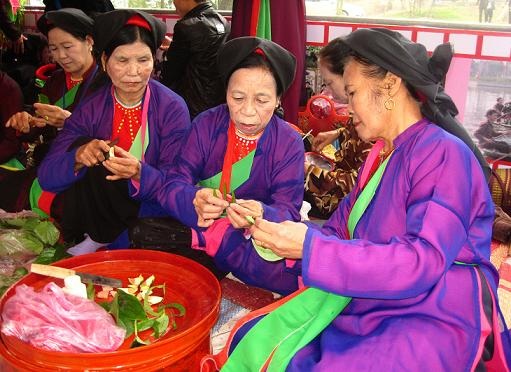
“The customs of chewing betel and areca nuts is connected to the ancient legend of betel and areca. Betel leaves and areca nuts are an indispensable part of the betrothal gifts of an engagement or wedding ceremony. The mixture of an areca leaf, betel bark, and hydrated lime makes the lips of those who eat it rosy.”
 |
| Betel and areca nuts are an indispensable betrothal gift during traditional weddings |
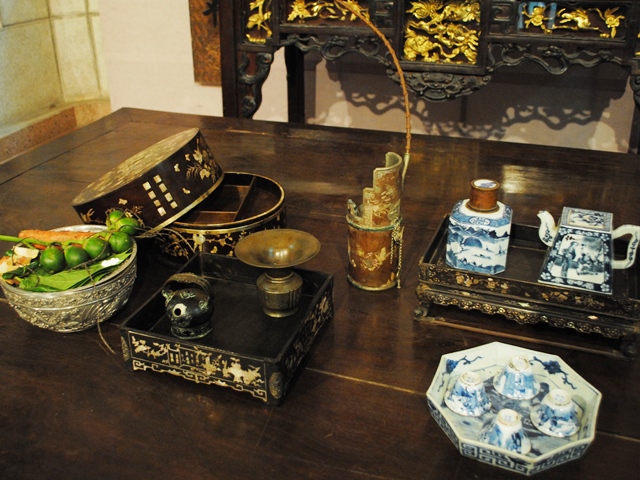
A betel kit
A betel kit includes a knife for splitting the areca nuts and shaping the betel leaves, a pot of lime, a tube of
“I began to chew betel and areca nuts when I was 26 years old. The habit helped me relieve toothache and other mouth infections. Sometimes I even got blisters in my mouth from chewing too much betel. But it would get better after I drank some alcohol.”
There aren’t any streets or markets which specialize in selling betel and areca nuts. Today only vendors from Hung Yen province or from outlying districts of Hanoi still offer the products. Thanh Tram has sold betel and areca nuts at Hang Be market in downtown Hanoi for more than 20 years.
“Betel and areca nuts grown in Nam Dinh and Hai Phong are now considered the best in the northern region. Few old people in Hanoi still retain the habit of chewing betel. Those who buy betel and areca nuts buy them for offering on the first or the fifteen day of every lunar month or for wedding ceremonies. On those occasions, I can sell hundreds of areca nuts. ”
It’s said that it’s easy to get blisters in the mouth or get drunk when you first chew betel. But when you are used to it, you can become addicted. At that point, a quid of betel is indispensable, according to Đoàn Văn Hùng of Cao Trung commune in Hanoi’s outlying district of Hoài Đức, who has 20 years of experience.
“Old people used to say that it’s better to peel off the green bark of areca but I learned on the Internet and heard through the media that although the bark is a bit hard, it makes the mouth fragrant, cools bad tempers, and makes digesting food easier. In the past I was a heavy smoker but now I’m addicted to chewing betel. Every day after a meal, I chew a quid of betel. In one day I can chew up to 20 quids of betel. When I must go out on business, I take a few quids along.”
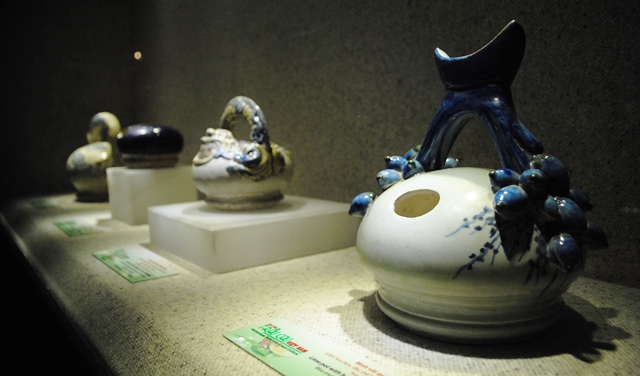 A lime-pot is an important and indispensable item in the betel kit.
In the countryside, many old people still maintain the habit of chewing betel. Thus dark green betel vines with big, thick leaves twining around tall areca trees can still be seen in the gardens of rural households. Hùng explains:
“In my village, we still grow many areca trees as we still have much land. Betel trees should be grown on high ground, without acid, or too much sun. The tree will grow better if lime is put near its root. It’s similar for areca trees which should be planted on high ground and digging around its root is forbidden.”
Chewing betel used to be a very popular practice among people in all walks of life, from ordinary people to royalty and has become a beautiful characteristic of Vietnam’s traditional culture. It is a custom among the majority Kinh group, and also among other ethnic groups, such as the Tay, Nung, Dao, Thai, Muong and San Diu in the northern areas, the Khmer, Bru, Edu and Cham living along the Truong Son Range and in the Central Highlands, and the Khmer in southern areas. Though today’s young people are not much interested in betel chewing, many old people in Vietnam still retain it as a beautiful custom.
