





 Vietnamese
 中文
中文
 日本語
日本語
 한국어
한국어
 Français
 Русский
 Deutsch
 Español
 Bahasa Indonesia
 ไทย
ไทย
 ພາສາລາວ
 ខ្មែរ
ខ្មែរ


Toan told VOV that last year, he coordinated with the Son Tra Peninsula Management Board to carry out the clean-up program involving 200 volunteers. Thanks to the positive impact, they have received the support from many organizations, especially the ‘For a Green Future Foundation’, which sponsor equipment and tools for the volunteer team. “This time it was very successful — we were able to mobilize over 1,500 volunteers,” he said.
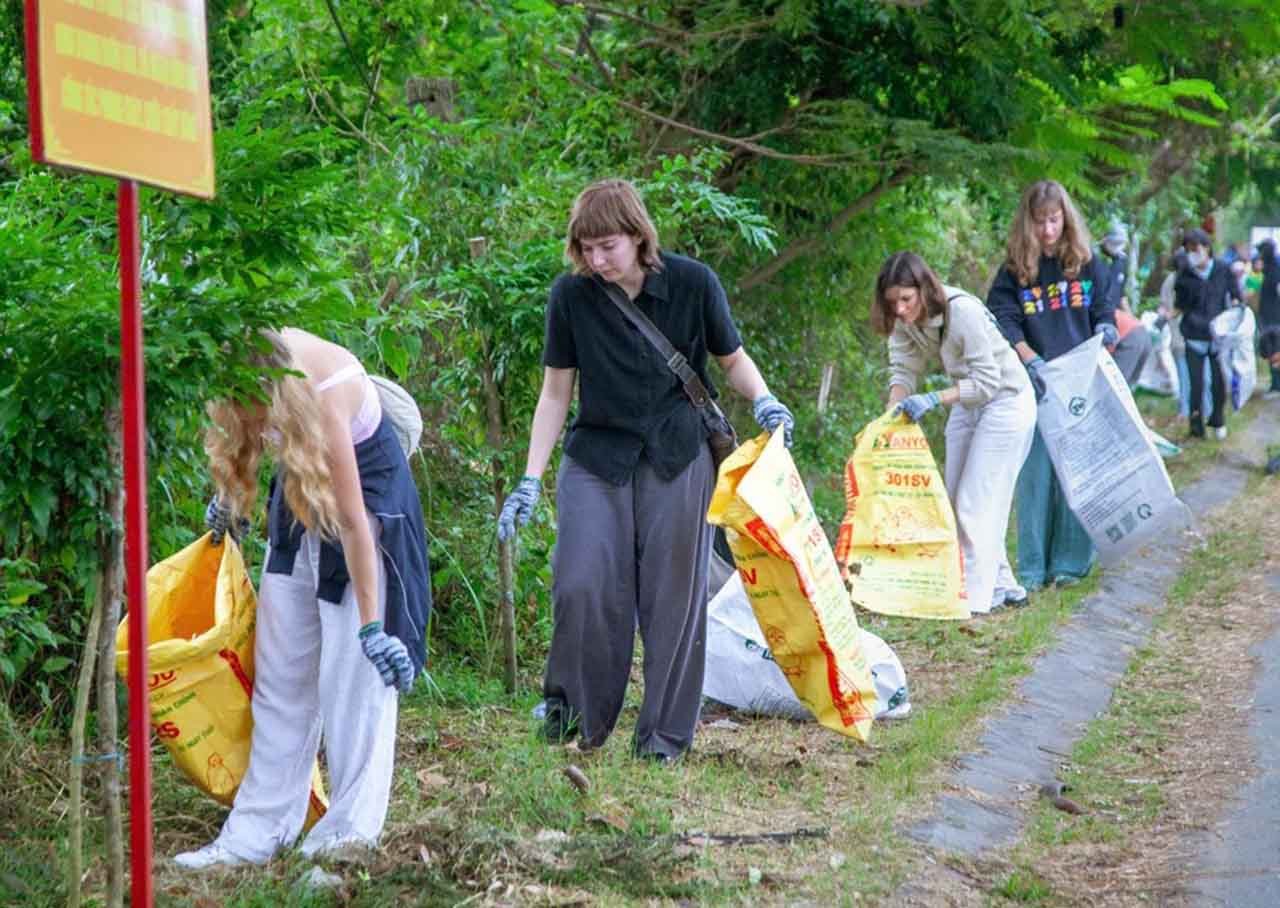 Volunteers collect trash at Son Tra peninsula, Da Nang. (Photo: Clean Up Son Tra campaign) Volunteers collect trash at Son Tra peninsula, Da Nang. (Photo: Clean Up Son Tra campaign) |
The clean-up program is part of a broader campaign aimed at raising public awareness about environmental protection. It encourages local residents and tourists to take part in biodiversity conservation efforts and the protection of wildlife in the Son Tra Peninsula.
Participants, who are youth union members, local citizens, and tourists, joined hands to clean up the beach and dive for underwater trash at Hon Sup Rock. Skilled volunteers do scuba diving to remove ghost nets and clean up the coral protection zone around the rock formation. The collected underwater waste was brought ashore, sorted according to environmental guidelines, and exchanged for meaningful gifts provided by the organizing committee as a gesture of appreciation and encouragement.
"I am in charge of coordinating with partners and organizing the eight separate teams to accomplish two main tasks. One of the teams—consisting of 100 carefully trained volunteers—undergo three rounds of diving practice and become proficient swimmers. They are responsible for diving and collecting trash around the coral reefs. The remaining seven teams, each with 150–200 volunteers, focus on cleaning up waste along the shorelines and all the way to the mountain peaks of the Son Tra Peninsula. Each group is assigned a team leader who is in charge of distributing tools and equipment, and provide on-site support to ensure the volunteers carry out their cleanup work effectively," Mr. Toan told us about how they work.
Tai, a co-leader of the main diving team, said: "As team leader, my job is to assemble the volunteers, do roll call, hand out equipment – knives, scissors, and trash bags – then head out to Hon Sup for the dive. We use the tools to cut away fishing nets entangled in the coral and collected any remaining waste. Afterwards, we return to shore and neatly pack up all our gear."
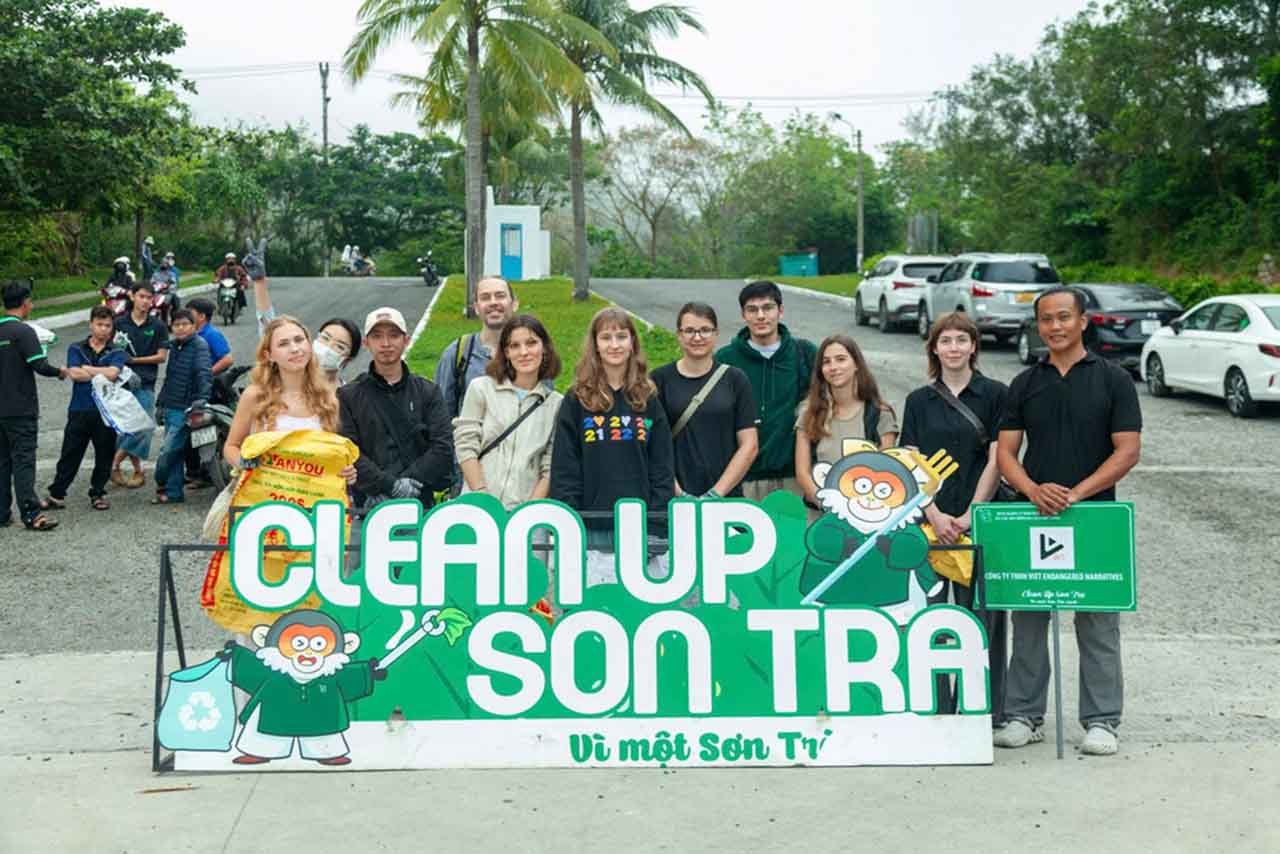 (Photo: Clean Up Son Tra campaign) (Photo: Clean Up Son Tra campaign) |
"The biggest challenge is ensuring the safety of our diving volunteers. It was incredibly difficult choosing 100 divers from 1,500 volunteers. Most of them are swimming majors from Da Nang University of Sports. We train them primarily in indoor swimming pools. Diving in the open sea is completely different. There are so many variables—water pressure, waves, wind, ocean currents—that you can't simulate indoors. The initial phase was particularly tough. It took time for everyone to adapt. By the third training session at sea, we began conducting on-site assessments. That’s when we saw how much the volunteers had grown in skill and confidence, " Mr. Toan explained.
Despite the obstacles, the team remain resilient. Their efforts didn’t go unnoticed. Around the cleanup site, many foreign tourists joined in enthusiastically. A foreign volunteer said: “It means a lot to me because I’ve lived in Vietnam for several years. I love nature and I want to help keep it clean and free of plastic.”
The team takes great pride in having female divers among them—women who face the same risks but show equal determination to protect Son Tra’s marine ecosystem, as Tai put it.
"Most of our divers are men, but a few women joined in, and they are incredibly committed. They help locate and retrieve trash from the coral reefs. Many have excellent skills—they can paddle up to two kilometers out to Hon Sup, dive down, scan the coral reefs, and pick out trash lodged in hard-to-reach places," Tai said.
In one morning the volunteers managed to clean up several spots on Son Tra peninsula—stretching from the Le Van Luong intersection to Ho Xanh, Bai Chay, Linh Ung -Pagoda, Bai Nam Beach, and along Yet Kieu Road.
Mr. Toan noted: "Team leaders reported that the amount of trash collected this year is significantly less than last year. We’re not hoping to find more trash—in fact, we see this as a positive sign that people are becoming more environmentally conscious. There were fewer plastic bottles, bags, and containers. The majority of what we collected were ghost nets. Our goal now is to continue removing those nets little by little. This gives us hope that our efforts are truly making an impact—raising awareness and protecting our natural treasures, especially the marine environment."
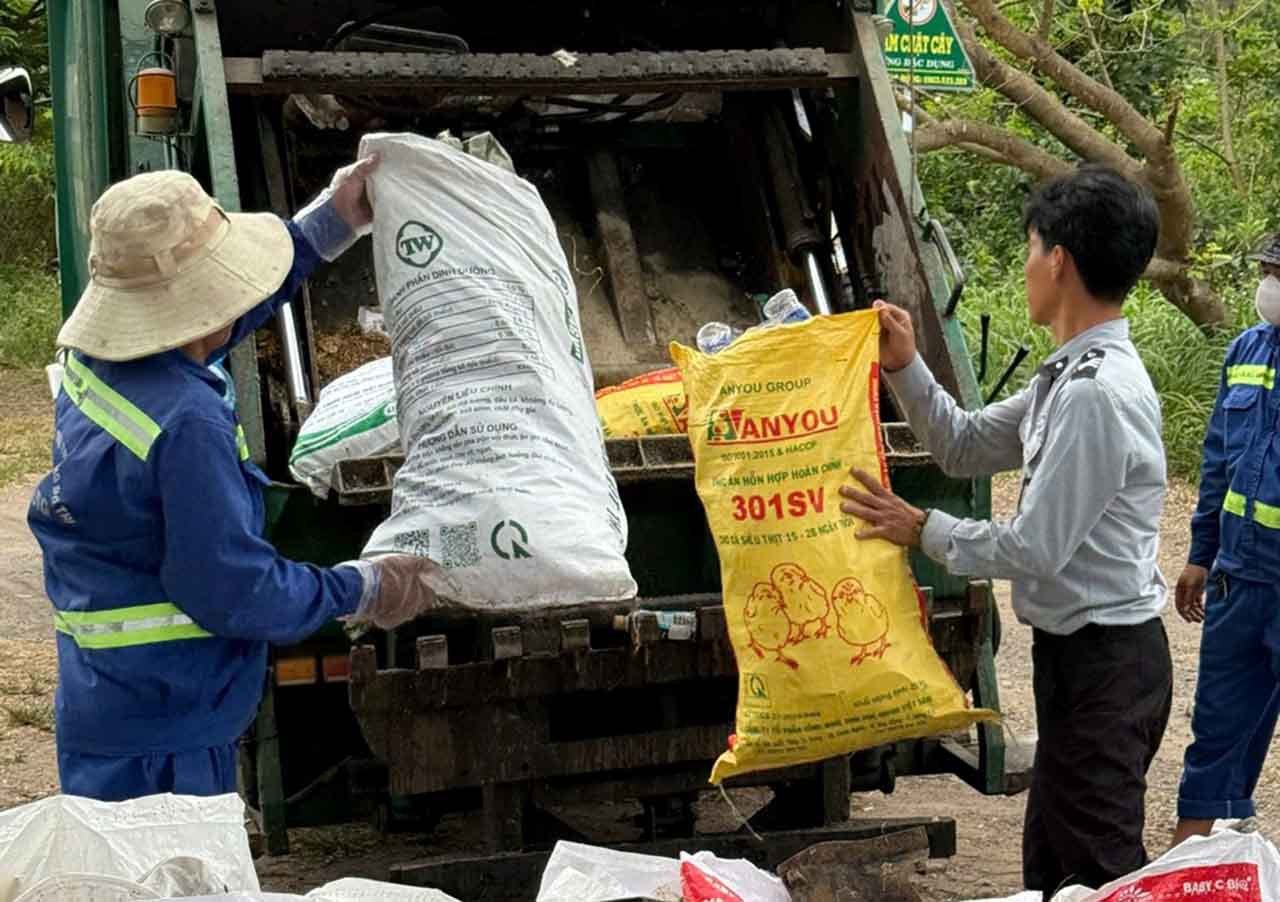 Volunteers collect trash at Son Tra peninsula, Da Nang. (Photo: Clean Up Son Tra campaign) Volunteers collect trash at Son Tra peninsula, Da Nang. (Photo: Clean Up Son Tra campaign) |
The Clean Up Son Tra campaign has inspired hands-on environmental action, positioning Da Nang as a greener, more attractive destination for domestic and international tourists. It connects universities, clubs, and communities in a shared mission of preserving coral reefs and the marine ecosystem on the peninsula, and fostering a deeper sense of environmental responsibility among the general public.
