





 Vietnamese
 中文
中文
 日本語
日本語
 한국어
한국어
 Français
 Русский
 Deutsch
 Español
 Bahasa Indonesia
 ไทย
ไทย
 ພາສາລາວ
 ខ្មែរ
ខ្មែរ


“I was born in Bat Trang village on the outskirts of Hanoi and had my teeth dyed black when I was around 16 years old. The reason? I think at that time all the women in my village had their teeth dyed black and my parents said that decent women should have their teeth blackened. My grandmother and sisters in-law also had their teeth blackened and I just followed them,” 86-year-old Phung Thi Nga of Hanoi explains why she had her teeth blackened.
There are many theories surrounding the custom of blackening teeth. The prevailing theory links it with betel nut chewing, a custom commonly practiced by women from Vietnam’s northern provinces.
“As far as I’m concerned, the customs of blackening teeth and eating betel nuts are not related. However, it would be better for those who eat betel nuts, like me, to have our teeth blackened for aesthetic reasons. White teeth may become permanently stained deep red or even black after chewing betel nuts for a long time. Eating betel nuts makes your blackened teeth stronger and makes them last longer,” said Ms. Nga.
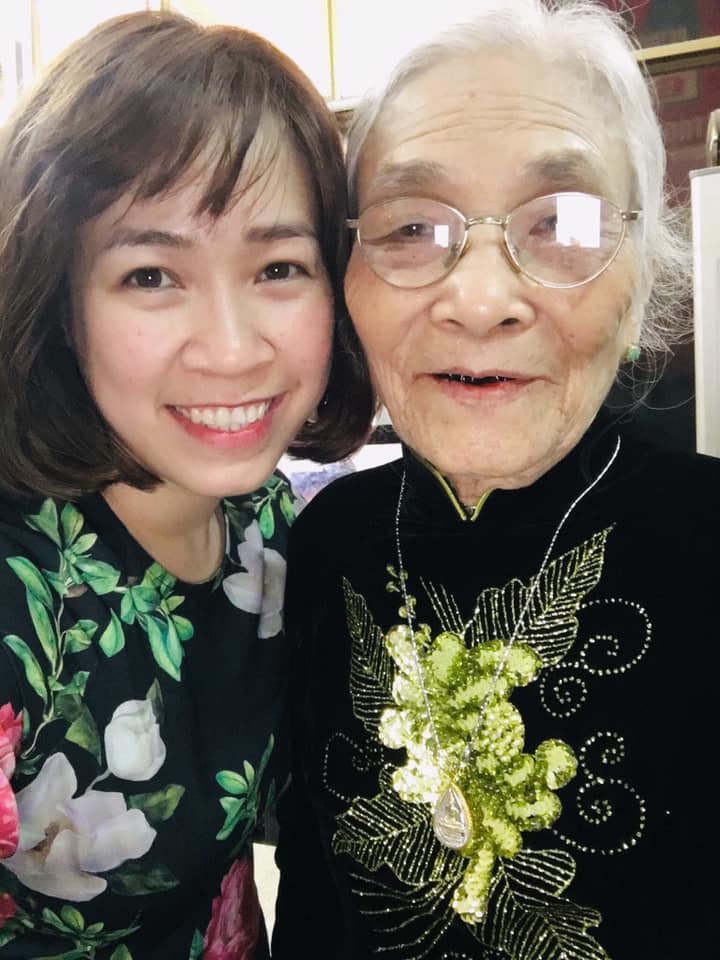 Ms. Nga and her grand-daughter on the first day of 2019 lunar New Year. Photo: Ngoc Diep/VOV5 Ms. Nga and her grand-daughter on the first day of 2019 lunar New Year. Photo: Ngoc Diep/VOV5 |
According to the late folklore researcher Ngo Duc Thinh, black teeth have a meaning that’s deeply rooted in Vietnamese spiritual beliefs. Thinh says white teeth were once associated with ghosts, underworld ghouls, and wild animals. Thus, blackened teeth were meant to protect their owner from evil spirits and supernatural beings.
Although black teeth were much loved, dyeing one’s teeth black was not easy. It is said to have been a complicated process that only professional “teeth dyers” could take on. The method involved ‘cleaning’ one’s teeth with dried betel nuts, sea salt, and coal powder for 3 days before the dying process began. One day in advance, one had to chew on limes and clean their mouth with rice wine to soften and thin the tooth enamel.
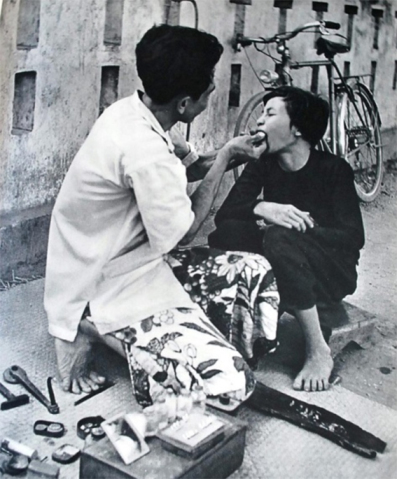 A woman had her teeth blackened on the street. Photo: Doan Trang/luocsutocviet.wordpress.com/ A woman had her teeth blackened on the street. Photo: Doan Trang/luocsutocviet.wordpress.com/ |
“After the cleaning process, a shellac mixture bought at the market was put on 2 pieces of rattan leaf, applied to the teeth after dinner, and left on overnight. The process was repeated every night for about a week and during this time, one could not chew, and could swallow as necessary. Hard or fatty food had to be avoided to ensure the best possible result – teeth stained a dark red color. Only then was it time to dye one’s teeth for 2 days with a mixture of alum and shellac, at which point the teeth became coated in a glossy, black colour. Next, a layer of glue, made from coconut, was applied to shield the freshly blackened choppers,” Ms. Nga revealed the next steps of the blackening process.
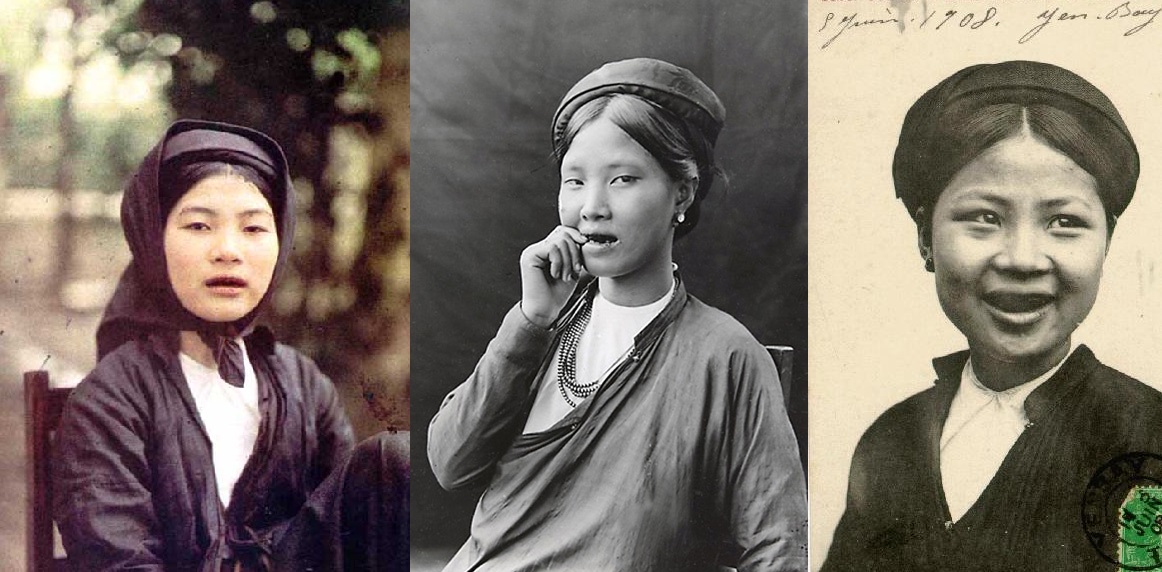 Blackening teeth has been more popular in central and northern Vietnam than in the south. Photo: luocsutocviet.wordpress.com Blackening teeth has been more popular in central and northern Vietnam than in the south. Photo: luocsutocviet.wordpress.com |
The treatment could last 20 years or more with proper care, but it was usual to repeat the treatment annually to maintain the colour. Ms. Nga’s teeth have remained black and polished after just one blackening at a young age.
Blackening teeth has been more popular in central and northern Vietnam than in the south and it was only in the 20th century, with the arrival of Western civilization, social revolutions and women’s rights movements that the tradition receded.
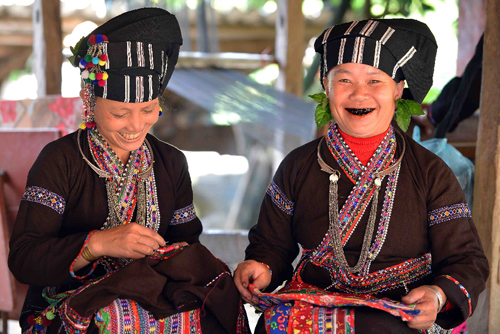 Lu ethnic women in Vietnam's northern mountain region. Photo: VNA Lu ethnic women in Vietnam's northern mountain region. Photo: VNA |
In addition to the Kinh – Vietnam’s biggest ethnic group - the custom was commonly practiced among the country’s minorities as well.
Lu women in Tam Duong district in the northern province of Lai Chau dye their teeth black using vegetable dyes. This is considered a mark of female beauty. White teeth are considered demonic or bestial while dark teeth are considered attractive.
"Our custom is that women of the Lu ethnic group, from the age of 13 or 14, have dyed their teeth black, and they should keep their teeth black until they die," said Lo Van Ngan of the Lu ethnic group in Ban Hon commune, Tam Duong district.
The image of a black-toothed girl "smiling brightly like a sunny autumn," found only in modern Vietnamese poetry, is nothing special in Lai Chau province’s Tam Duong district, where the Lu ethnic women are proud of their blackened teeth.
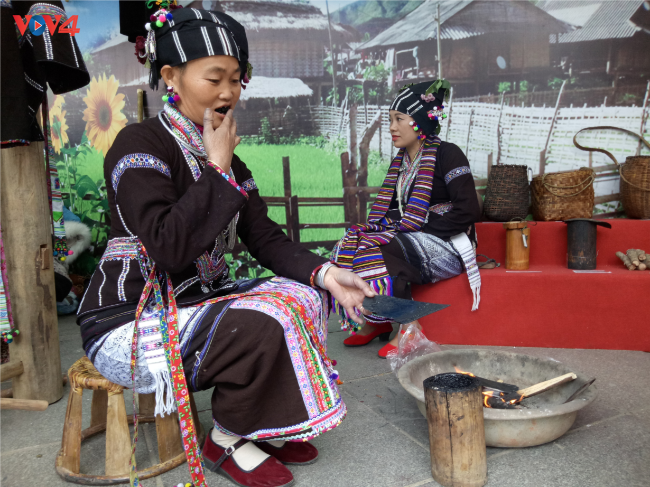 A Lu ethnic woman is dyeing her teeth next to the fire stove. Photo: VOV4 A Lu ethnic woman is dyeing her teeth next to the fire stove. Photo: VOV4 |
"I had my teeth blackened for the first time when I was 14. It was a very popular trend for Lu women to dye their teeth back then as people said this practice makes women look more beautiful while preventing tooth decay. I still keep this practice and keep blackening my teeth every day after dinner before going to bed. My daily routine would be incomplete without this practice," said En.
According to Lo Van Sau of Hon hamlet in Tam Duong district, Lu women make vegetable dyes for their teeth from a special local plant, which is hung to dry and burnt to coals. This substance is then put into a bamboo tube and placed next to the fire stove. The tube is covered with a cast iron plate and as the tube gets hotter, it creates steam, which coats the plate with a black substance ready for dying teeth.
Lò Văn Ngần of Ban Hon commune, Tam Duong district, says locals consider women with black teeth more attractive.
"We should follow this tradition because it has been passed down from our ancestors. Lu people think only lazy people don’t want to blacken their teeth every night. White teeth are not favoured and a Lu girl with white teeth will not have many boys falling for her," said Ngan.
Lu women are not allowed to whiten their teeth during their entire life for another reason, according to Nguyễn Thanh Tùng, Head of the Culture and Information Division of Tam Duong district.
The image of a woman with blackened teeth may be fading into obscurity, but it remains a fascinating icon of Vietnamese culture.
|
|
