





 Vietnamese
 中文
中文
 日本語
日本語
 한국어
한국어
 Français
 Русский
 Deutsch
 Español
 Bahasa Indonesia
 ไทย
ไทย
 ພາສາລາວ
 ខ្មែរ
ខ្មែរ


(VOVworld) - TPP negotiations concluded in Hanoi last Wednesday. Joining the Trans-Pacific Partnership agreement will provide Vietnam both opportunities in investment and exports and new challenges.
Twelve TPP negotiators in the latest round of negotiations debated access to goods and service markets, investment, intellectual property, to environment, state-owned enterprises, and the law. They also conducted bilateral exchanges. For Vietnam, a developing country, becoming a TPP member will boost domestic production, trading, investment, and exports.
 |
Once the TPP agreement takes effect, up to 90% of taxes will be cut to 0% when Vietnamese products are exported to major markets like the US, Australia, Japan, and Canada. The export-import revenue of TPP members is forecast to reach 230 billion USD. Participation will increase Vietnam’s trade as much as 30%. In order to enjoy the substantial tariff reduction, Vietnam’s export products must meet origin requirements. Currently half of Vietnamese raw materials are imported from non-TPP nations. The domestic market will become more open to imports, meaning Vietnamese enterprises will face stiffer competition at home. Nguyen Duc Thuan, Vice Chairman of the Management Board of the Vietnam Enterprise Investment Company, say: “the TPP agreement covers many new areas on which we haven’t negotiated much, so policymakers should study them in order to create a favorable legal environment to protect Vietnamese enterprises. The government should provide support in the form of investment orientations for Vietnam’s garments and textiles auxiliary industry and garment companies should improve their competitiveness.”
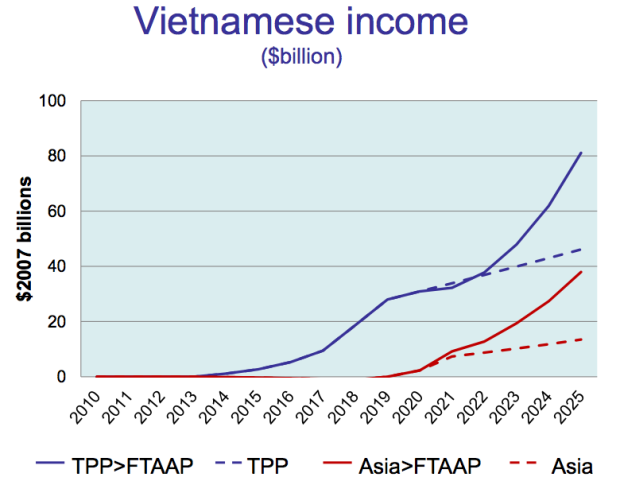 |
| “Vietnam would be the largest beneficiary on the TPP track and of an Asia- Pacific-wide agreement” (Photo: amchamvietnam.com) |
The TPP favors a level playing field without discrimination toward developed or developing countries. It is a great opportunity but also requires Vietnamese enterprises to improve their capacity to match more developed nations. Economist Tran Du Lich says: “the government is working to restructure SOEs, the banking system, investment, and public procurement to attract new investment flows and match new TPP conditions. As a result, it’s time for enterprises to insist on sustainable growth and attach more importance to restructuring their operations. Vietnamese companies should particularly focus on the quality of personnel and solidifying business associations as a bridge to penetrate new markets.”
