





 Vietnamese
 中文
中文
 日本語
日本語
 한국어
한국어
 Français
 Русский
 Deutsch
 Español
 Bahasa Indonesia
 ไทย
ไทย
 ພາສາລາວ
 ខ្មែរ
ខ្មែរ


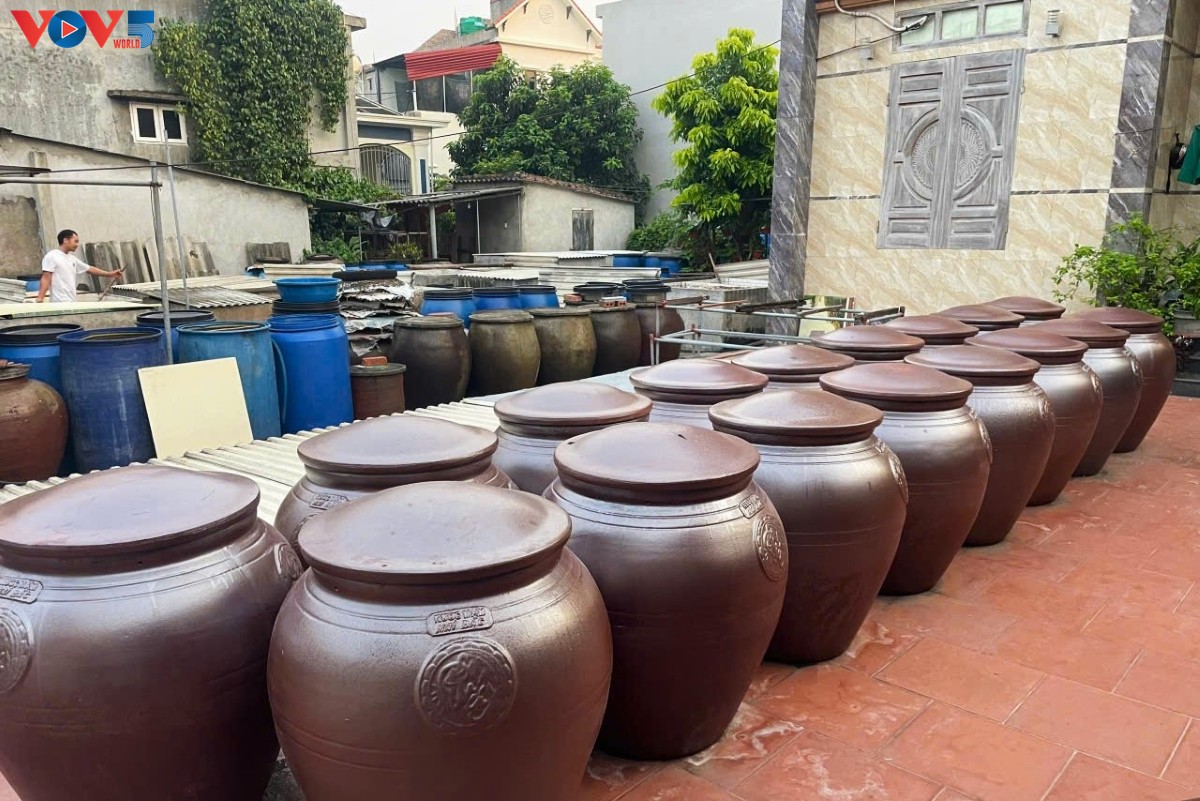 Sa Chau village has long been famous for fish sauce making craft. (Photo: Kim Lieu) Sa Chau village has long been famous for fish sauce making craft. (Photo: Kim Lieu) |
Sa Chau’s fish sauce craft, which dates back centuries, is closely linked with the daily lives of coastal residents. For generations, locals have followed a 100% manual process, with strict rules and no machinery. This devotion is what gives Sa Châu fish sauce its distinctive quality and reputation.
Vu Duy Tinh, who has spent nearly 50 years in the trade, told VOV, “Our ancestors say this craft is 200 years old. My grandparents, parents, my in-laws—all made fish sauce. When I married in 1978, I continued the family tradition, and have stayed with it ever since.”
The main ingredients are mackerel, cuỗm fish, and tiny shrimp from the Giao Hung coast. They must be fresh—not frozen or crushed—and harvested only when plump with nutrients, like anchovies in winter or mackerel in spring. Late-winter and early-spring catches are best. Underaged or overripe fish are avoided to ensure flavor. The baskets used to carry the fish ashore are made of bamboo, not plastic or metal, to preserve the purity.
Villager Vu Van Hai said their fish sauce is made from shrimp, fish, and salt. 10 kilos of fish need 1.3 kilos of salt; 10 kilos of shrimp, 1.7 to 1.8 kilos. Ingredients vary with the season.
“When the shrimp are plump, we use less salt. Mixing must be even, and fermentation takes at least a year. The longer it ages, the better the flavor. Once the brine rises, we know it’s ready. In June’s scorching sun, it takes 2–3 days to dry, but in weaker sun, longer,” said Hai.
The salt is as crucial as the fish. Only salt from Bach Long, a traditional salt-making village in Giao Hung, is qualified for its saltiness and micronutrients. According to artisan Nguyen Van Ba, the salt must be bought in late April or May and stored in a warehouse for at least a year to mellow before use.
“For quality fish sauce, it has to be Bạch Long salt. Ratios change with the season: in May and June, 16% salt; from October onward, 18%. Early-season shrimp are small and soft, so less salt is needed. From September when they’re meatier, we add more salt to preserve the batch,” Ba further explained.
After being salted, the fish is fermented naturally for six months before being pressed through bamboo baskets lined with coarse cloth to yield pure sauce. Unlike elsewhere, the sauce here is never boiled but sun-fermented for another six months.
Stored in wide, 20cm-deep glazed terra-cotta jars and set out across courtyards, the liquid absorbs both sun and dew, giving it a deep sweetness. But rain is its worst enemy because it isn’t cooked. Day or night, someone must rush to cover the jars when it rains.
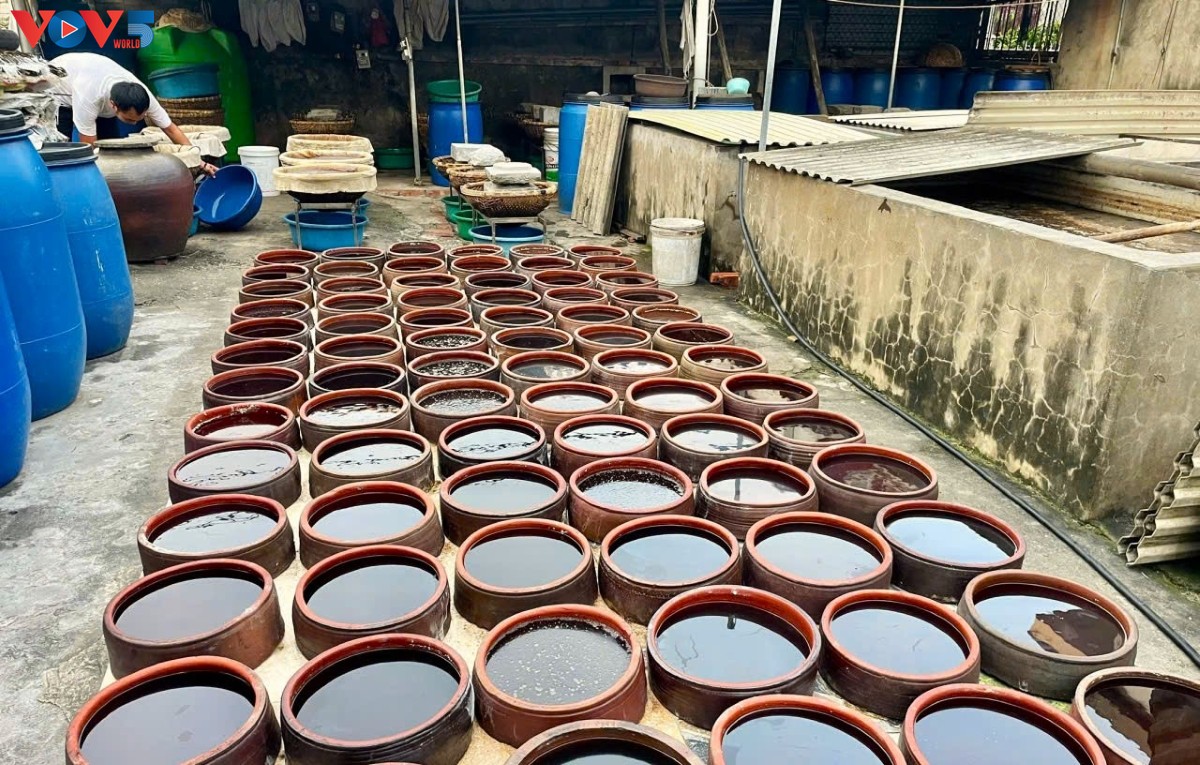 Drying fish sauce is the final step before it becomes the finished product. (Photo: Kim Lieu) Drying fish sauce is the final step before it becomes the finished product. (Photo: Kim Lieu) |
The best season runs from April to October, when the blazing sun and high heat condense the sauce, turning it a rich amber-brown.
Vu Van Huy, who is carrying on his family trade as the third generation, told VOV that fermentation produces a lot of gas, so they have to stir it regularly to release the gas. Clay jars are used for fermentation. “The sauce must meet three standards: aroma, taste, and color. It should have the distinct smell of traditional fish sauce – not just saltiness, but a sweet aftertaste,” said Huy.
At its peak, Sa Chau had 400 households making fish sauce. Today, 30 remain, with 10 producing on a large scale, averaging 450,000 to 500,000 liters a year. Sa Chau fish sauce is popular in many provinces.
Sa Chau fish sauce is a unique culinary specialty and a source of pride for the locals. Each drop carries the savory taste of the sea, the labor of generations, and the story of a northern coastal village that continues to preserve its traditional craft.
