





 Vietnamese
 中文
中文
 日本語
日本語
 한국어
한국어
 Français
 Русский
 Deutsch
 Español
 Bahasa Indonesia
 ไทย
ไทย
 ພາສາລາວ
 ខ្មែរ
ខ្មែរ


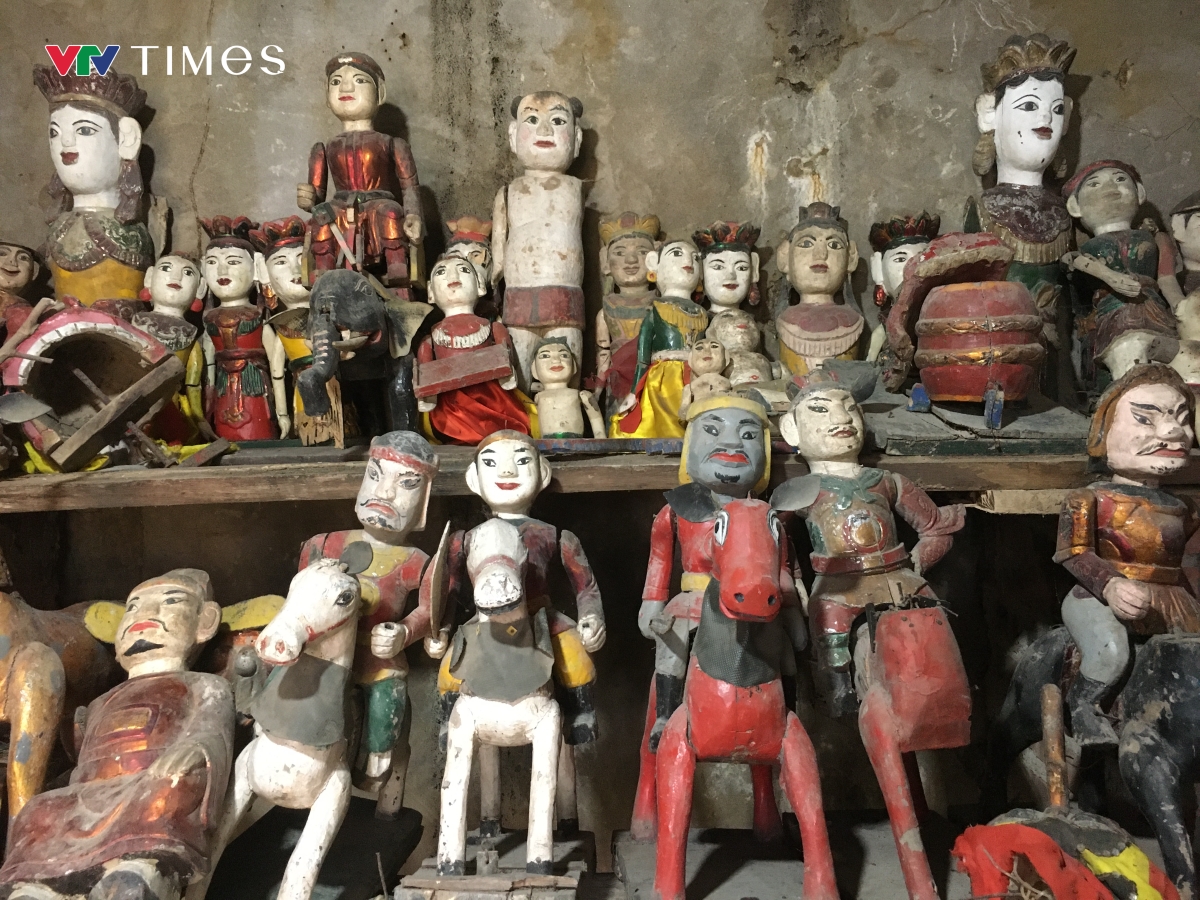 Rach village preserves more than 1,000 antique water puppets. (Photo: Mai Chien/VTV Times) Rach village preserves more than 1,000 antique water puppets. (Photo: Mai Chien/VTV Times) |
Originally famed for lacquer painting and statue carving—especially for temples and communal houses—Rach artisans blended these skills into crafting water puppets. Each puppet is carved, painted, and equipped with sophisticated control mechanisms that transform it from a wooden figure into a living character that can act out the lives of farmers or characters of folklore or historical legends and myths.
Artisan Phan Van Trien, head of the Nam Chan Water Puppetry Troupe, said, “The greatest challenge in puppet design is making the puppets move naturally, revitalizing and giving them facial expressions, smiles, and gestures that connect tradition with modern life.”
Rach’s artisans handle every aspect of the puppetry performances—from scriptwriting to the unique underwater choreography. Their repertoire includes 18 traditional shows, often performed without dialogue, relying instead on expressive puppet movements accompanied by folk music and traditional instruments like ceremonial drums, two-string fiddles (nhị), bamboo flutes, moon lutes (đàn nguyệt), and wooden clappers (mõ).
Artisan Trien recalled he learned from the elders when he was small, adding, “Gradually, I was drawn to the art, loved and then performed it. From that love, I created puppets. Being both performer and puppet maker allows us to adapt the carving to the underwater choreography — a unique and enriching experience.”
In recent years, as Rach village has embraced tourism, performances have been adapted for bigger audiences of tourists. Puppet troupes now perform at various venues, including private homes using portable puppet theaters, which helps to introduce the art to younger generations.
Dang Van Ben, Deputy Head of the Nam Chan troupe, said, “While we honor our ancestors’ traditional performances using folk puppets, we’ve also developed new skits tailored for different age groups, particularly students, responding to modern society’s evolving tastes.”
Rach’s water puppetry has gained recognition far beyond the village. The village troupe has performed nationwide and internationally—in Japan, France, Sweden, and across Western Europe—where audiences received them warmly.
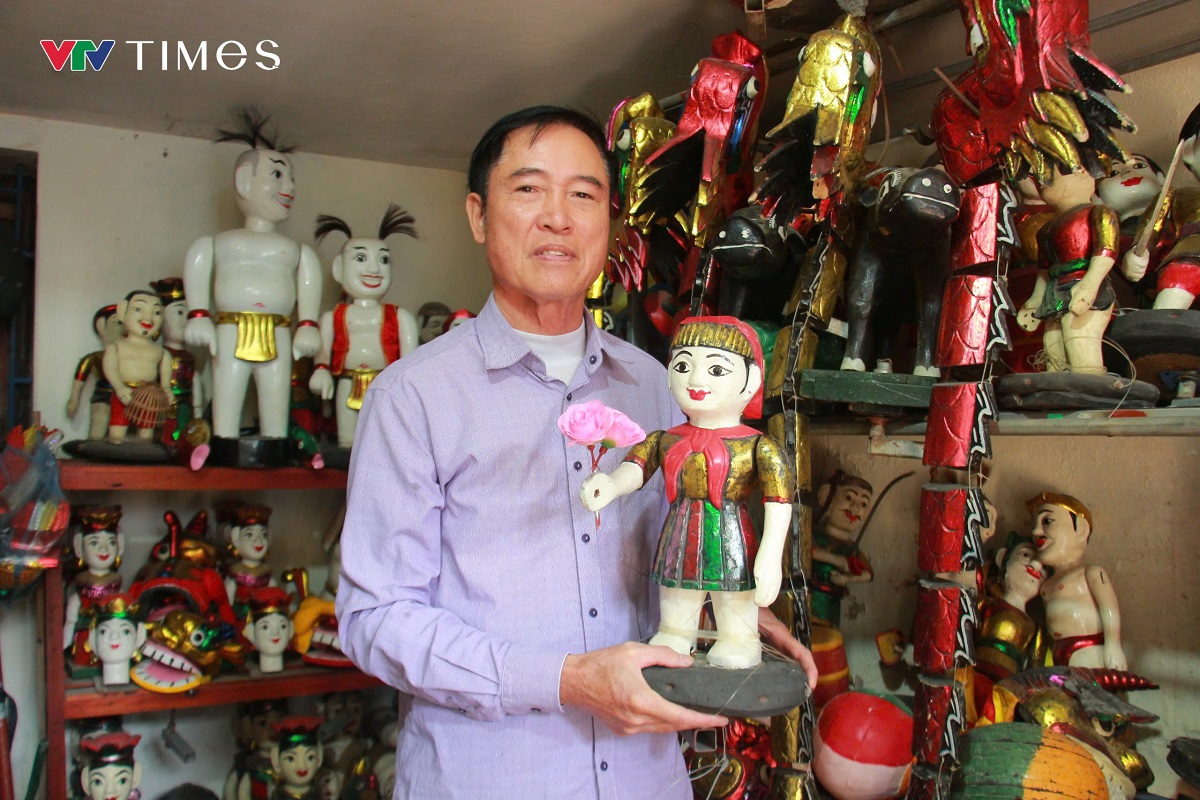 Artisan Phan Van Manh (Photo: Mai Chien/VTV Times) Artisan Phan Van Manh (Photo: Mai Chien/VTV Times) |
To keep the art from fading, the villagers keep creating new plays, inspired by Vietnamese fairy tales, legends, and contemporary themes to engage younger viewers. Equally important has been the establishment of puppet-making workshops within the village, where veteran artisans pass their carving, mechanical design, and lacquer expertise to the next generation.
The busy workshops provide the “soul” of the performances and sustain the craft, according to Trien. “I inherited this craft from my grandfather while I was still a student and I have since modernized the workshop by integrating new machinery and gathering skilled carvers and lacquer artists who share my passion,” Trien told VOV, adding, “We have a skilled team that produces puppets for troupes nationwide, and our work is highly appreciated.”
The growth of tourism has spurred the development of water puppet souvenirs, which gives the artisans more income and helps to promote the craft more widely. Seven households in Rạch village now produce souvenir puppets. Phan Van Manh, Head of the Song Que troupe, said, “These miniatures are just smaller versions of the original puppets. My passion for water puppetry is deeply personal—I grew up immersed in it, following my grandfather and father’s footsteps.”
Thanks to the love, dedication, and tireless efforts of multiple generations, Rạch village’s water puppetry continues to be an integral part of the Vietnamese cultural identity.
