





 Vietnamese
 中文
中文
 日本語
日本語
 한국어
한국어
 Français
 Русский
 Deutsch
 Español
 Bahasa Indonesia
 ไทย
ไทย
 ພາສາລາວ
 ខ្មែរ
ខ្មែរ


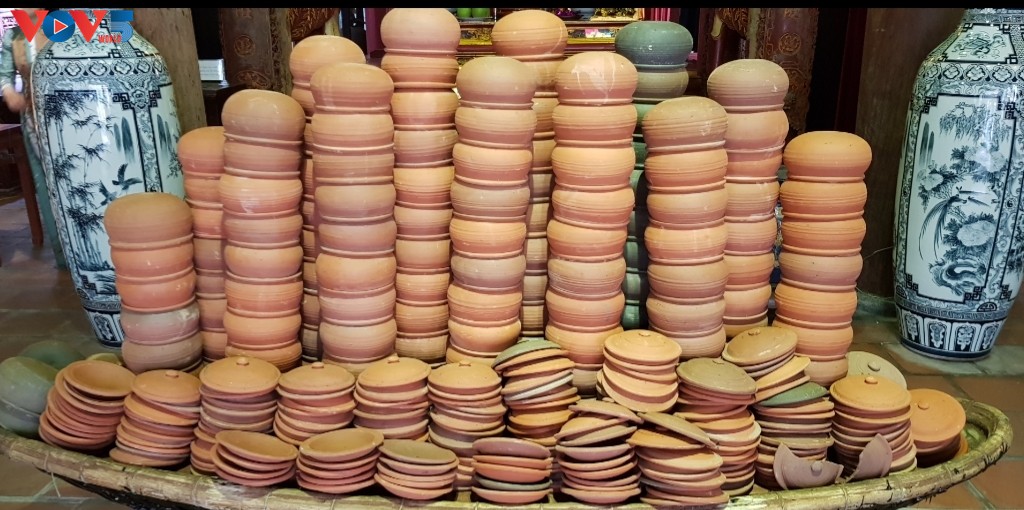 Ceramics on display at the “Story of Pottery” event. (Photo: Ngoc Anh) Ceramics on display at the “Story of Pottery” event. (Photo: Ngoc Anh) |
Pottery is one of the earliest crafts in Vietnamese history. Bestowed with numerous rivers and streams throughout its length, which provides abundant clay soil for pottery making, Vietnam saw dozens of pottery villages spring up, some of which still exist today.
The highlight of the cultural activities is a display of ceramic products from Bat Trang village in Hanoi and Phu Lang village in neighboring Bac Ninh province, and a Chi ceramic workshop in Hanoi.
“Bat Trang ceramic products have shapes, patterns, and glaze colors that cannot be found anywhere else. Our glaze colors are created from natural ingredients. For example, dark brown is created by using soil mixed with alluvium taken from the Red River. We mix powdered lime with burned rice husks and then add clay to the crushed mixture to create a glaze whose color is beautiful and sparkling,” said Pham Ngoc Huy, an artisan from Bat Trang.
Vietnamese potters, known for their creativity and skillful hands, have contributed to making Vietnamese pottery a world-famous folk art.
“Vietnam’s ceramic products are now available in many countries, including France, Germany, the UK, the US, and Japan. Vietnam’s pottery has seen vigorous growth in the past few years. Bat Trang village has long been famous for its mass production of stunning ceramic products of great quality,” painter Nguyen Manh Duc told VOV.
 An artisan shows his skill of making ceramics. (Photo: Ngoc Anh) An artisan shows his skill of making ceramics. (Photo: Ngoc Anh) |
The products on display let visitors explore the history and development of Vietnamese pottery and witness the entire process of making ceramics while listening to the artisans' stories about Vietnam’s pottery villages.
“Story of Pottery” is promoting Vietnamese culture to a wider public, according to Dao Thi Lien Huong, Head of the Foreign Ministry’s Vietnamese Fine-Art Mobilization Committee.
