





 Vietnamese
 China
China
 Japan
Japan
 Korea
Korea
 Germany
 Russia
 Laos
Laos
 French
 Indonesian
 Khmer
Khmer
 Spanish
 Thai
Thai


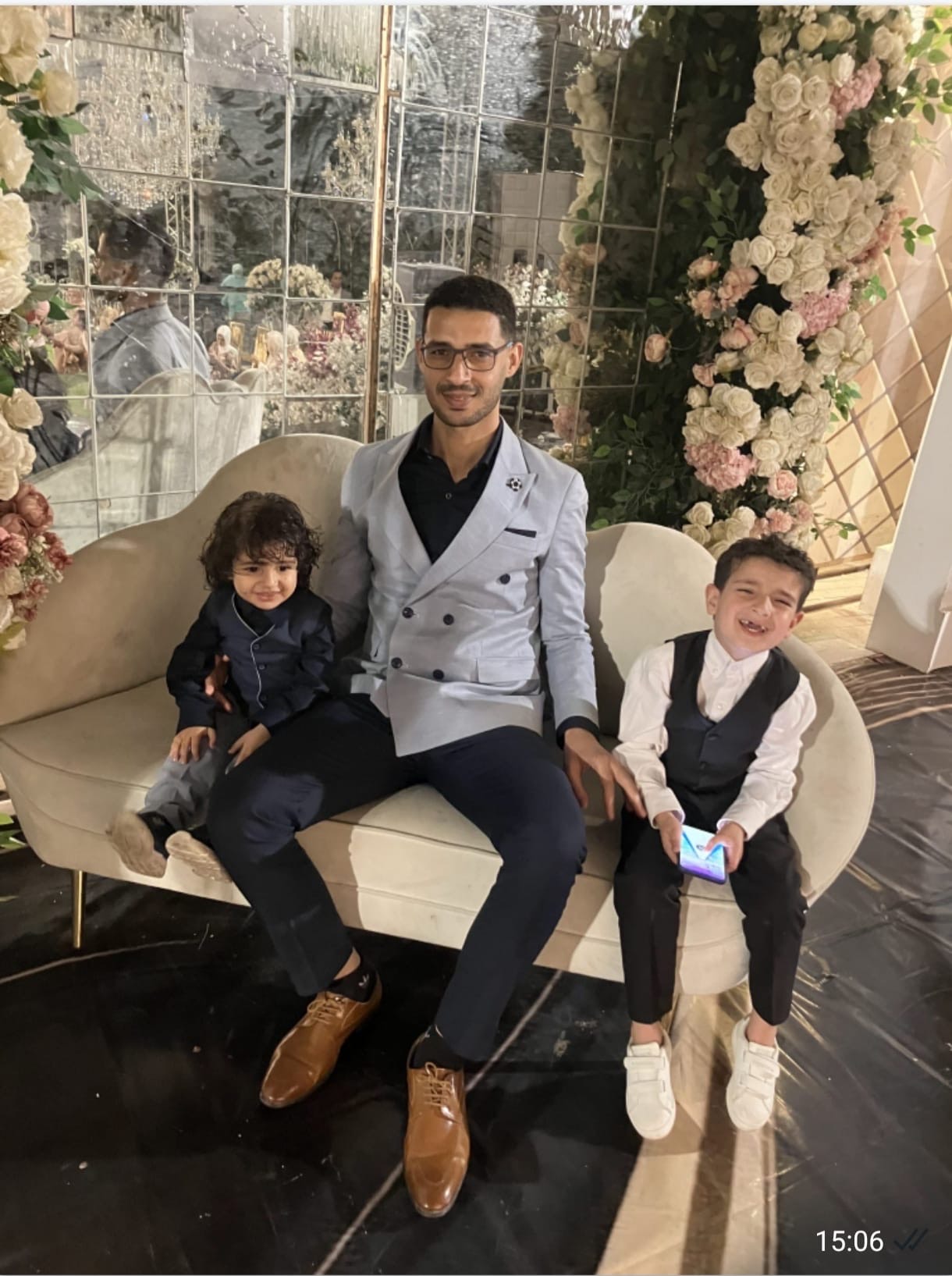 Elabbady and his two children attend his brother's wedding. (Photo: Islam Elabbady) Elabbady and his two children attend his brother's wedding. (Photo: Islam Elabbady) |
Just like in Vietnam, things begin with an engagement, it’s when both families officially give their blessing. During this time, the groom also gives his fiancée two traditional gifts: the Mahr and the Shabka.
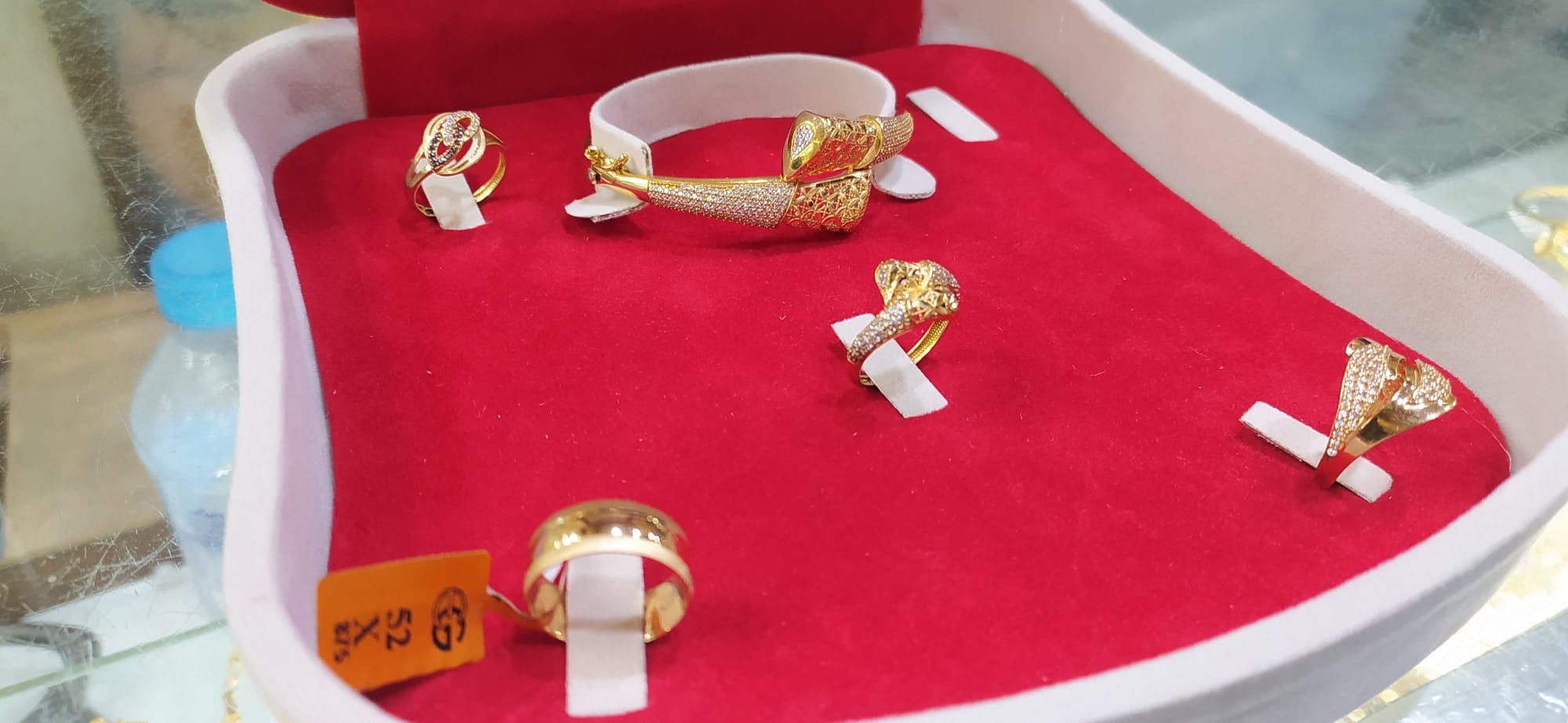 Shabka is a traditional engagement gift, typically a set of gold jewelry that the groom gives to the bride. (Photo: Islam Elabbady) Shabka is a traditional engagement gift, typically a set of gold jewelry that the groom gives to the bride. (Photo: Islam Elabbady) |
“On the Henna night, what happens is the groom celebrates with his friends and his family at his home and they eat together, they listen to music while the bride celebrates with her family and her friends at her home," Elabbady explained.
"Henna is a natural dye which is applied to the hands and feet of the bride on that day, it’s a deeply rooted tradition in Egypt and in Arab countries, which is said to bring good luck and blessing to the bride on that day.”
 Henna tattoo is an indispensable part of Henna night. (Photo: Stephen and Helen Jones/Wikimedia Commons) Henna tattoo is an indispensable part of Henna night. (Photo: Stephen and Helen Jones/Wikimedia Commons) |
Once that’s done, the real party kicks off - the Farah. That’s when everyone joins in the celebration as Elabbady puts it. “The family, the groom and the bride and their families, their friends and their acquaintances, they come all together, they celebrate together, they dance, they listen to music. In conservative communities, girls dance with girls on the stage and next to them, the youth and the friends of the groom dance with the groom and with themselves.”
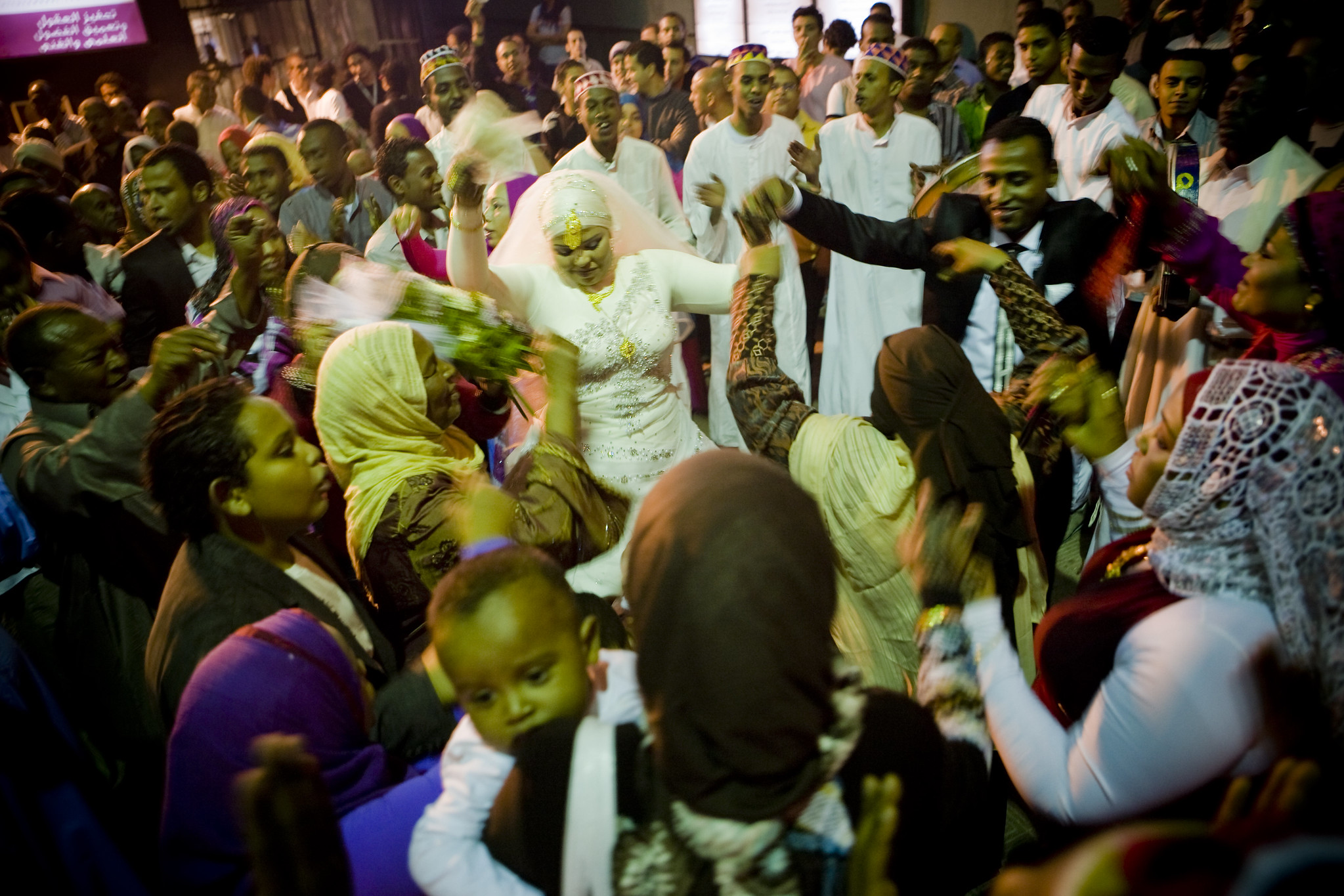 A wedding in Zamalek, Egypt. (Photo: Hossam el-Hamalawy/Flickr) A wedding in Zamalek, Egypt. (Photo: Hossam el-Hamalawy/Flickr) |
“In the past, Shabka was more of a necessity with much more jewelry and money. But over time, the meaning of this changed, and because of the financial circumstances, most of the families in Egypt nowadays wouldn't like to load the young people with many financial requirements, especially since they are at the beginning of their life. They would like to make it easier for them to get married, that's why the requirements are becoming easier in Egypt. But there are still some families in some rural communities which still consider the financial aspect of Shabka and Mahr relatively significant.”
Despite not being a mandatory element of the traditional wedding process in Egypt, more and more young couples here are exchanging rings as a symbol of love and devotion, yet with an Islamic touch. This usually happens during their engagement ceremony.
“And there is also the exchange of rings, something that we have taken from the Western civilization. I would say it happens widely in Egypt nowadays that the bride and the groom exchange rings. What's different here in Egypt is that the ring for the groom is usually made of silver, because in Islam, it's not allowed for a man to wear gold. The ring of the bride remains in gold. The rings are exchanged and are worn during the engagement celebration on the right hand. Later, in the wedding celebration, it is switched to the left hand. It symbolizes the transition from the engagement to the marriage state.”
 An Egyptian couple dance at their wedding in Alexandria, Egypt. (Photo: Abdlrhmnelsyed/Wikimedia Commons) An Egyptian couple dance at their wedding in Alexandria, Egypt. (Photo: Abdlrhmnelsyed/Wikimedia Commons) |
Elabbady continued: “What's very special about this day is the music, because there is a very common local music which we can call Egyptian street music. It's called Mahraganat, a very well-known trend in Egypt and it emerged among the poor or the middle class youth. But now, because of the energy it brings in the celebration, it has also become much more common in the upper classes in Egypt.”
In Egypt, a wedding isn’t just about two people falling in love. It’s about two families coming together and supporting the couple.From planning to the party itself, both families play an active role, they help cover costs, sort out the guest list, calm nerves, and sometimes weigh in on even the tiniest decisions.
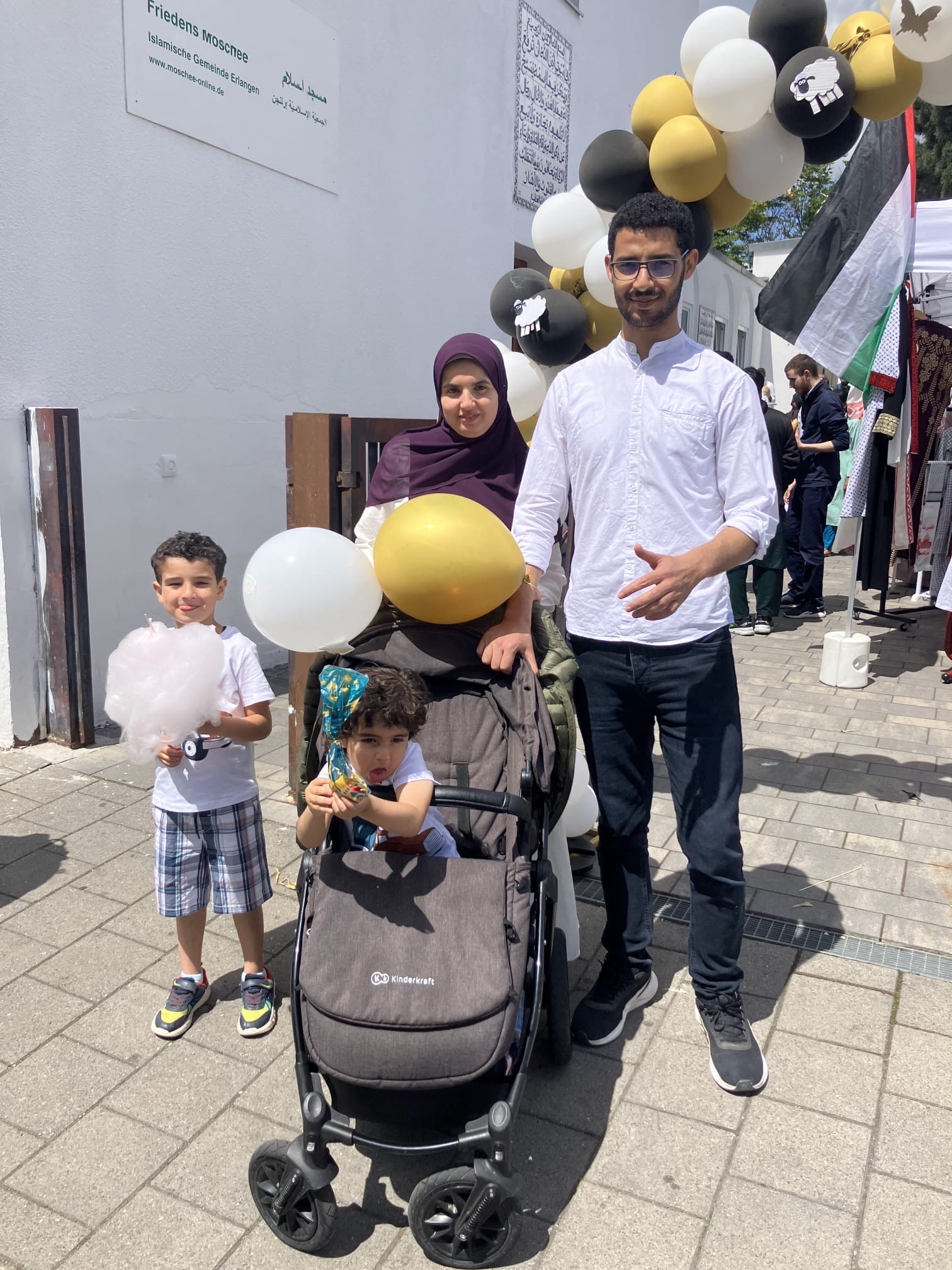 Elabbady and his family celebrate the Al Adha feast in Egypt. (Photo: Islam Elabbady) Elabbady and his family celebrate the Al Adha feast in Egypt. (Photo: Islam Elabbady) |
In many ways, it’s just like in Vietnam, where weddings are a community affair and family support is seen as essential for a strong start. Through all the trends and changes, one thing stays the same: family is at the heart of it all and building a shared future.
