





 Vietnamese
 中文
中文
 日本語
日本語
 한국어
한국어
 Français
 Русский
 Deutsch
 Español
 Bahasa Indonesia
 ไทย
ไทย
 ພາສາລາວ
 ខ្មែរ
ខ្មែរ


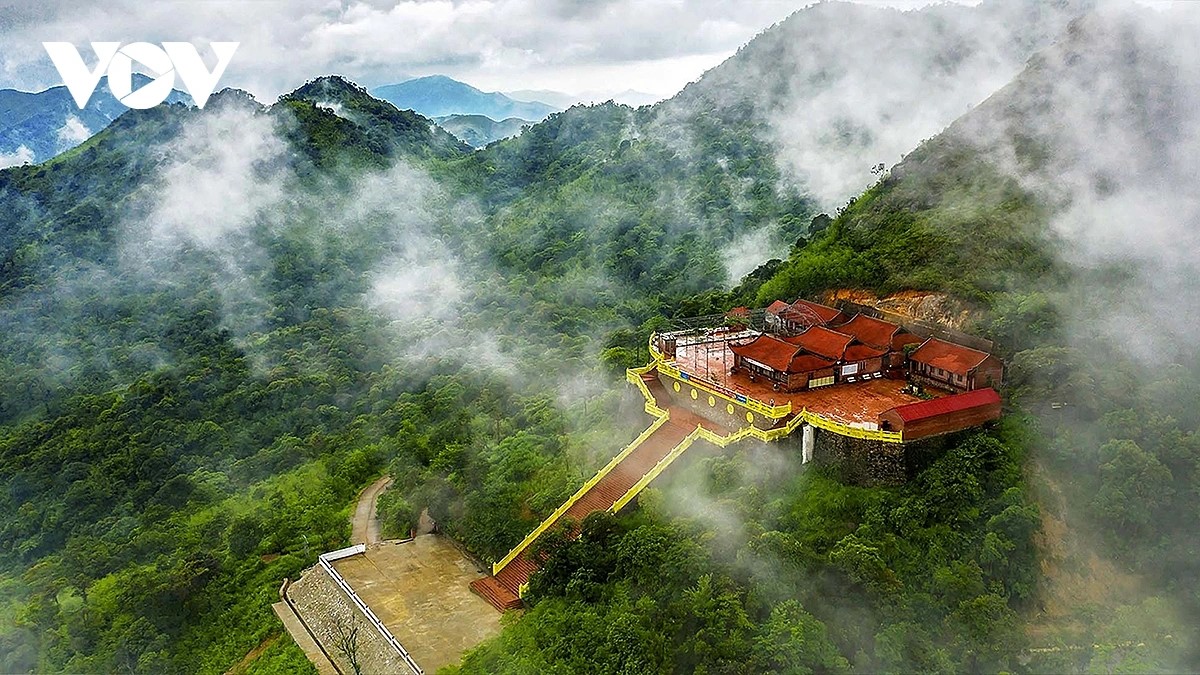 All elements in the Yen Tu-Vinh Nghiem-Con Son, Kiep Bac complex are protected. (Photo: Truong Giang/VOV-Northeast Bureau) All elements in the Yen Tu-Vinh Nghiem-Con Son, Kiep Bac complex are protected. (Photo: Truong Giang/VOV-Northeast Bureau) |
The complex consists 12 individual and grouped relics of six special national relic zones in Quang Ninh province, Bac Giang province (now Bac Ninh), and Hai Dương province (now Hai Phong city). Covering 525 hectares on the Yen Tu mountain range in northeastern Vietnam, the complex boasts ancient architectural works and birthplace ofthe Truc Lam Zen sect, founded by King-Monk Tran Nhan Tong in the 13th century.
The beauty of Yen Tu lies in its superb mountains where ancient temples and stupas quietly blend with serene natural landscapes. There are hundreds of hermitages, stupas of Zen masters, and Buddhist steles. Yen Tu mountain has a rich ecosystem of fauna and flora. In 2012, Yen Tu was designated a special national historical and scenic relic site. Every year, it welcomes millions of pilgrims.
“This is my first visit to Yen Tu. I climbed up the mountain instead of taking the cable car. This is one of the most beautiful and sacred places I’ve ever been to,” a visitor said.
“This place is majestic and magnificent. This sacred place offers a sense of inner peace us.”
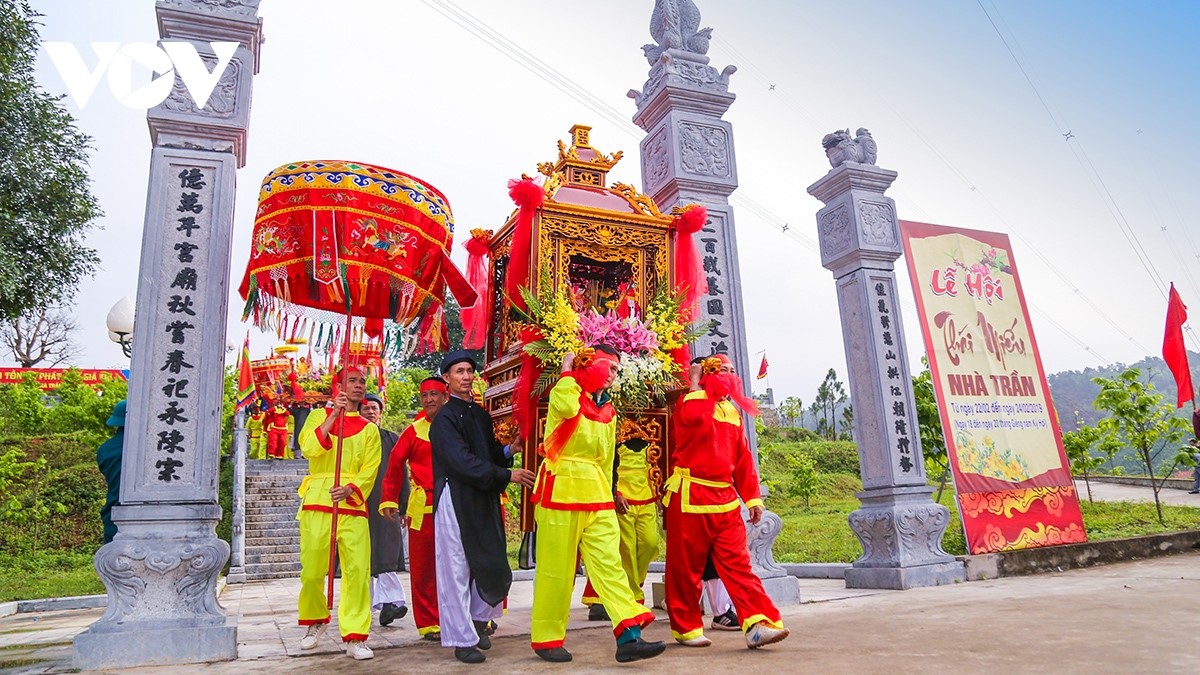 Traditional festivals are revitalized. (Photo: Truong Giang/VOV-Northeast Bureau) Traditional festivals are revitalized. (Photo: Truong Giang/VOV-Northeast Bureau) |
Vinh Nghiem pagoda preserves 3,000 woodblocks of ancient Truc Lam Buddhist scriptures, which were recognized by UNESCO as a World Documentary Heritage in 2012. These woodblocks are the “source code” of Truc Lam Zen, a pure philosophy of Vietnamese Buddhism.
Venerable Thich Thanh Vinh, Deputy Abbot of Vinh Nghiem pagoda, said: “Vinh Nghiem pagoda plays two roles: as a center for teaching Truc Lam Buddhism and as a center for carving, publishing, and distributing scriptures. We preserve the woodblocks by translating their contents. The management board divides the woodblocks into groups, and the ones deemed most relevant to modern society are prioritized for translation. Since 2015, three high-value sets have been translated.”
Vinh Nghiem pagoda, with its solemn Trinity Gate, ceremonial hall, incense hall, main shrine, and iconic eight-roof bell tower, is a masterpiece of Ly and Tran dynasty architecture. It was once home to all three Truc Lam progenitors and served as the headquarters of the Truc Lam Buddhist Sangha and Vietnam’s first monastic training school.
While Vinh Nghiem is the foundational center of the Truc Lam sect, Con Son-Kiep Bac is where the Truc Lam sect came to life. Incorporating the cultural values of multiple regions, Con Son-Kiep Bac is a treasure of tangible and intangible heritages.
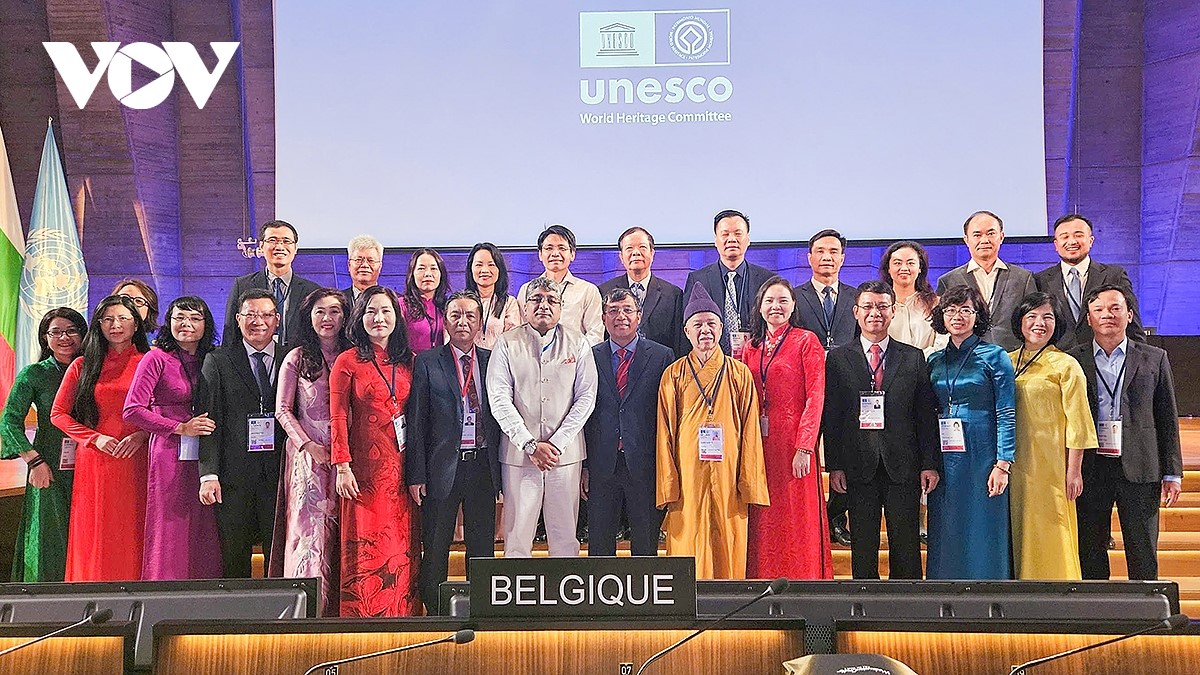 The Vietnamese delegation at the 47th session of the UNESCO World Heritage Committee. (Photo: Truong Giang/VOV-Northeast Bureau) The Vietnamese delegation at the 47th session of the UNESCO World Heritage Committee. (Photo: Truong Giang/VOV-Northeast Bureau) |
Stretching from the sacred peak of Yen Tu to Vinh Nghiem pagoda and the Con Son–Kiep Bac relics, this heritage route represents a continuous historical flow from past to present. With its recent recognition by UNESCO as a World Cultural Heritage Site, the complex has gained international acclaim and is poised to create new cultural and economic values as Vietnam deepens its global integration.
