




 Vietnamese
 中文
中文
 日本語
日本語
 한국어
한국어
 Français
 Русский
 Deutsch
 Español
 Bahasa Indonesia
 ไทย
ไทย
 ພາສາລາວ
 ខ្មែរ
ខ្មែរ


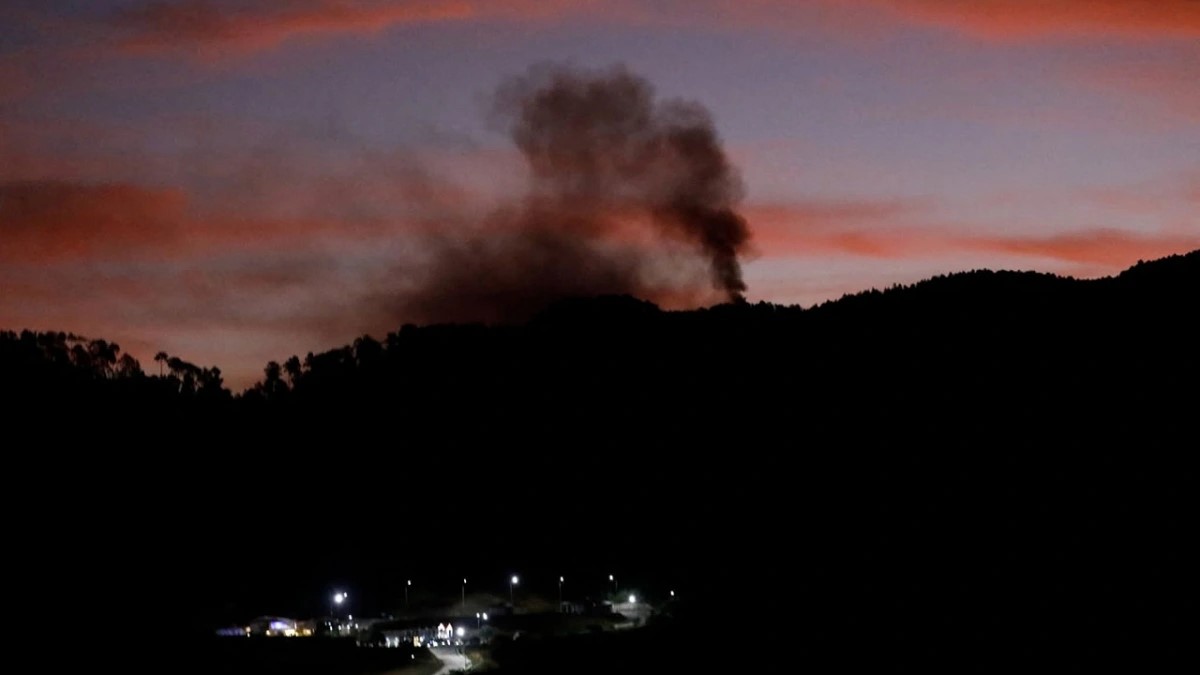 Smoke rises after a US military attack on Venezuela, January 3, 2026. Photo: REUTERS Smoke rises after a US military attack on Venezuela, January 3, 2026. Photo: REUTERS |
In the early hours of Saturday, US forces launched a surprise attack on Venezuela, arresting President Maduro and his wife and transferring them to the US for trial on drug-related charges alleged by Washington.
International concern
The raid marked a flashpoint in a prolonged period of tension between the US and Venezuela that has intensified over recent months. During this time, the US administration deployed a large military force to the Caribbean and carried out operations it said were aimed at combating drug trafficking. While these operations initially focused on interdictions of small boats, they gradually escalated to the seizure of oil tankers. Last week, US forces conducted an airstrike against a target on Venezuelan territory.
The arrest of President Maduro is a major turning point, taking the US campaign into a more dangerous phase.
The crisis has erupted with the Russia-Ukraine conflict unresolved, the Phase One ceasefire in Gaza fragile, and multiple flashpoints smoldering across Asia, Africa, and the Middle East, and has exposed deep divisions within the international community.
While a small number of close US allies, including Israel, has voiced support for Washington’s actions, the majority of countries, including several European allies such as France, Germany, Norway, and Denmark have criticized the capture of Maduro, arguing that it undermines international law, and have called for a de-escalation of tensions.
UN Secretary-General António Guterres warned that the Venezuela crisis could have bad consequences for the region and stressed the importance of all parties fully respecting international law, including the UN Charter.
Mary Ellen O’Connell, Professor of Law and International Peace Studies at the University of Notre Dame in Indiana, said: "The
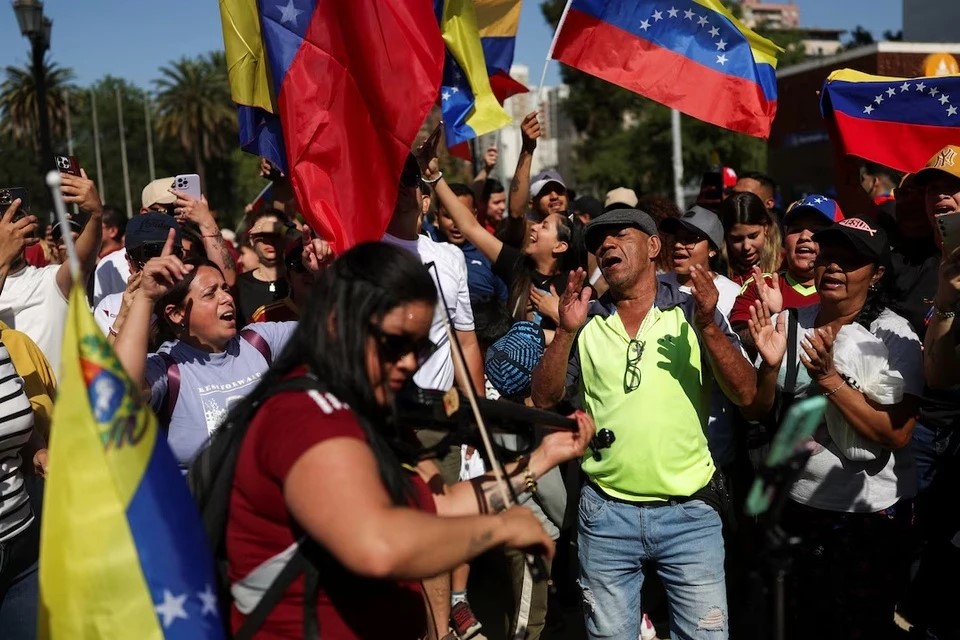 Venezuelans protest demanding the US release Maduro, January 4, 2026. (Photo: REUTERS) Venezuelans protest demanding the US release Maduro, January 4, 2026. (Photo: REUTERS) |
In addition to concerns over violations of international law and the multilateral order that has been upheld for decades, many countries and organizations including Russia, China, Cuba, and the Bolivarian Alliance for the Peoples of Our America (ALBA) have called on the US administration to immediately release President Maduro and his wife. Legal experts have warned that prosecuting a sitting head of state poses serious legal challenges.
An uncertain future
Many observers are concerned about the long-term strategic implications of the crisis. Venezuela occupies a critical geopolitical position between the Caribbean and South America and has the world’s largest proven oil reserves, estimated at around 300 billion barrels.
According to ING Group’s chief economist Carsten Brzeski, the crisis is certain to affect global oil markets in the long run, though immediate impacts are likely to be limited. Venezuela currently produces only about 800,000 to one million barrels per day. OPEC+, meanwhile, has increased its output in recent months, resulting in an ample global oil supply.
In the long term, the large-scale exploitation of Venezuela’s oil resources that US officials are openly discussing could push oil prices lower, benefiting some large economies while forcing many smaller countries to rethink their long-term economic and environmental strategy.
Brzeski said: "When
The big question now facing the international community is what comes next for Venezuela. The country’s new civilian and military leadership will be under pressure to respond decisively to the crisis, and the US will need to clarify its long-term strategy. According to Professor Ellen O’Connell, how the international community responds in the coming days will be critical to the future of the global order.
